Back to the page
  • Welcome
  • Visit us
    • Visit us
    • Opening times & information
    • Visiting – travel, dogs, toilets, etc.
    • Ticket Prices
    • Pre-book tickets
    • Garden map
    • Group Visits
    • Tours
    • Press and photography
    • The Garden Café
    • The Garden Shop
  • Accessibility
  • What’s on
  • The Garden
    • The Garden
    • About the Garden
    • Horticultural Collections
    • Understanding Plant Labels
    • History of the Garden
    • Wildlife
    • Plant picks of the week
  • Learning
    • Learning
    • Schools
    • Colleges and Universities
    • Short Courses
    • Family Activities
    • Communities
    • Science on Sundays
    • Trails for Adults
    • Certificate in Botanical Horticulture
  • Science
    • Science
    • Our Science Staff
    • Our Staff Publications
    • Your Science
    • Supporting Your Research
    • Phenology Project
  • Collections
    • Collections
    • Living Collections
    • Seed Bank
    • Herbarium
    • Cory Library
    • Archives
    • Living Collections Portal
    • Botanic Dyes
  • News
  • Support Us
  • Friends
    • Friends
    • Join the Friends
    • Friends’ Events
    • Corporate Support and Corporate Friends
    • Gift Memberships
Donate
Cambridge University Botanic Garden
menu

Today's Opening Times:
10:00am - 4:00pm

  • News
  • Support Us
  • Contact Us
  • Donate
  • Home
  • Visit us
    • Ticket Prices
    • Opening times & Information
    • Visiting – travel, dogs, toilets, etc.
    • Garden Map
    • Group Visits
    • Tours
    • Pre-book tickets
    • Press & Photography
    • The Garden Shop
    • The Garden Café
    • Accessibility
    • Virtual Visits
  • What’s on
  • The Garden
    • About the Garden
    • Horticultural Collections
    • Understanding Plant Labels
    • History of the Garden
    • Wildlife
    • Plant picks of the week
  • Learning
    • Schools
    • Colleges and Universities
    • Short Courses
    • Family Activities
    • Communities
    • Science on Sundays
    • Trails for Adults
    • Certificate in Botanical Horticulture
  • Science
    • Our Science Staff
    • Our Staff Publications
    • Your Science
    • Supported Publications
    • Supporting Your Research
    • Phenology Project
  • Collections
    • Living Collections
    • Herbarium
    • Seed Bank
    • Cory Library
    • Archives
    • Collecting Expeditions
    • National Plant Collections ®
    • Living Collections Portal
    • Botanic Dyes
  • Friends
    • Join the Friends
    • Gift Memberships
    • Friends’ Events
    • Corporate Support and Corporate Friends
  • Open search panel
Close search panel
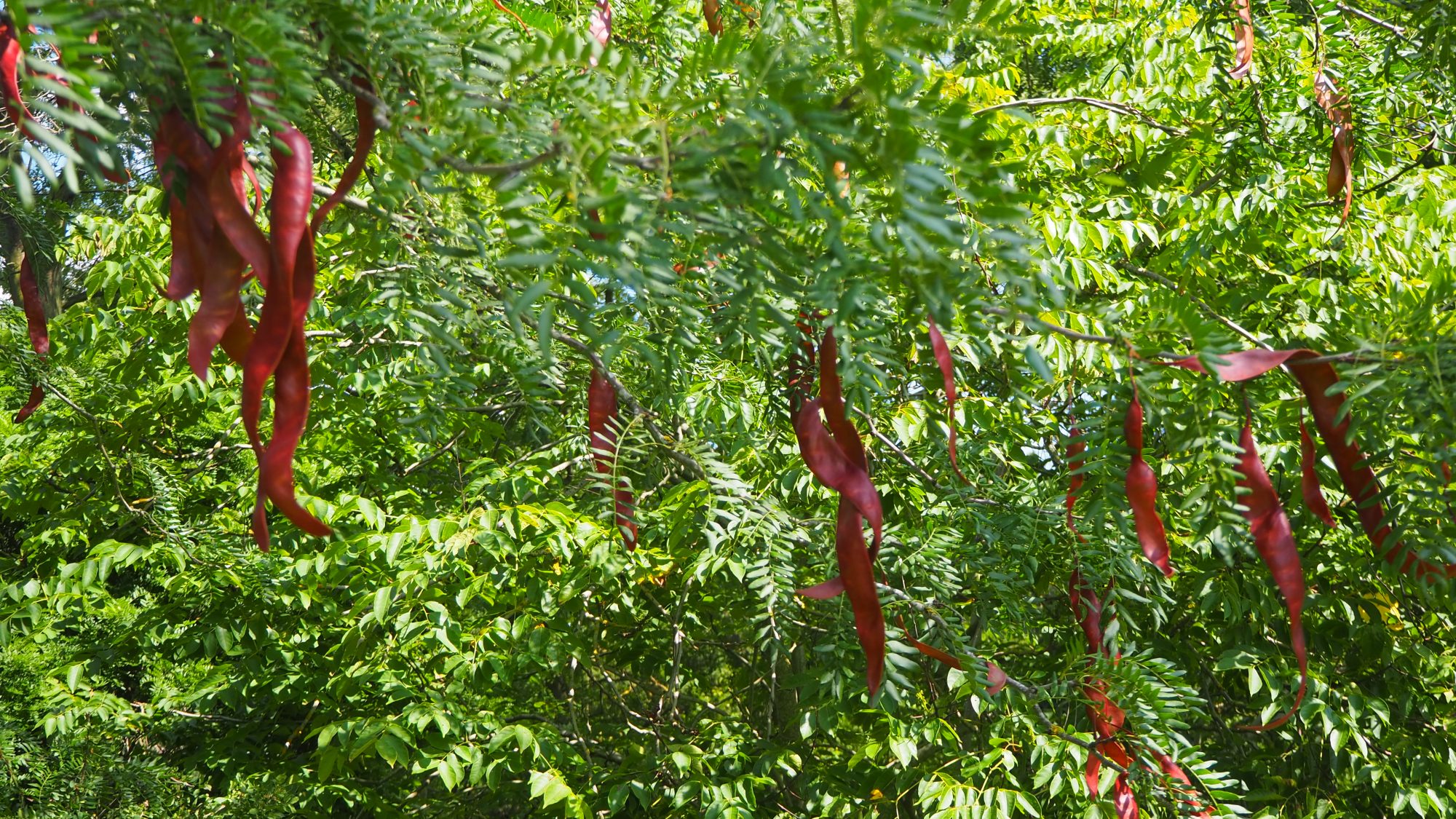
Seed pods of the honey locust tree.
Home Learning Trails for Adults Trees of the Botanic Garden Gleditsia triacanthos (Fabaceae)
Share Created with Sketch.
  • Email Share this with Email
  • Facebook Share this with Facebook
  • Twitter Share this with Twitter
  • Pinterest Share this with Pinterest
  • WhatsApp Share this with WhatsApp
  • Google + Share this with Google plus

Gleditsia triacanthos (Fabaceae)

The trunk of the honey locust is armed with thorns, which may have been a defence against large extinct herbivores. Despite its name, it is not a significant honey plant – this refers to the sweet taste of the pulp inside its pods, which has long been used for food and medicine by Native Americans.

The pea and bean family (Fabaceae) is large, comprising around 19,000 species (approximately 7% of all flowering plant species). Many of them are agriculturally important, including soybean (Glycine max, of which around 350m tonnes is produced every year, 70% of which is used as animal feed), pea (Pisum sativum), chickpea (Cicer arietinum) and peanut (Arachis hypogaea).

Many plants in Fabaceae have specialised structures called ‘root nodules’ that host bacteria called ‘rhizobia’. The bacteria take nitrogen gas and convert (or ‘fix’) it to a form which is usable by the host plant – in effect, providing fertilizer. In return, the plant provides the bacteria with organic acids as a carbon and energy source.
Next: Pyrus communis
Previous: Parrotia persica
Return to the trail home page.

University of Cambridge Museums and Botanic Garden

Social

  • Follow us on YouTube
  • Follow us on Twitter
  • Follow us on Instagram
  • Follow us on Facebook
  • Follow us on Threads
  • Follow us on LinkedIn

© 2026 Cambridge University Botanic Garden

  • Privacy policy
  • Contact us