Did you know that the orchid family is the largest plant family in the world?
There are estimated to be 410 flowering plant families globally, containing more than 350,000 species, but the orchid family, with over 760 genera and 26,000 species is one of the most species-rich flowering plant families (rivalled only by the daisy family, Asteraceae). Orchids are cosmopolitan in their distribution, with species growing from cloud forests, tropical forests and temperate forests, to grasslands, bogs, semi-arid and arid regions.
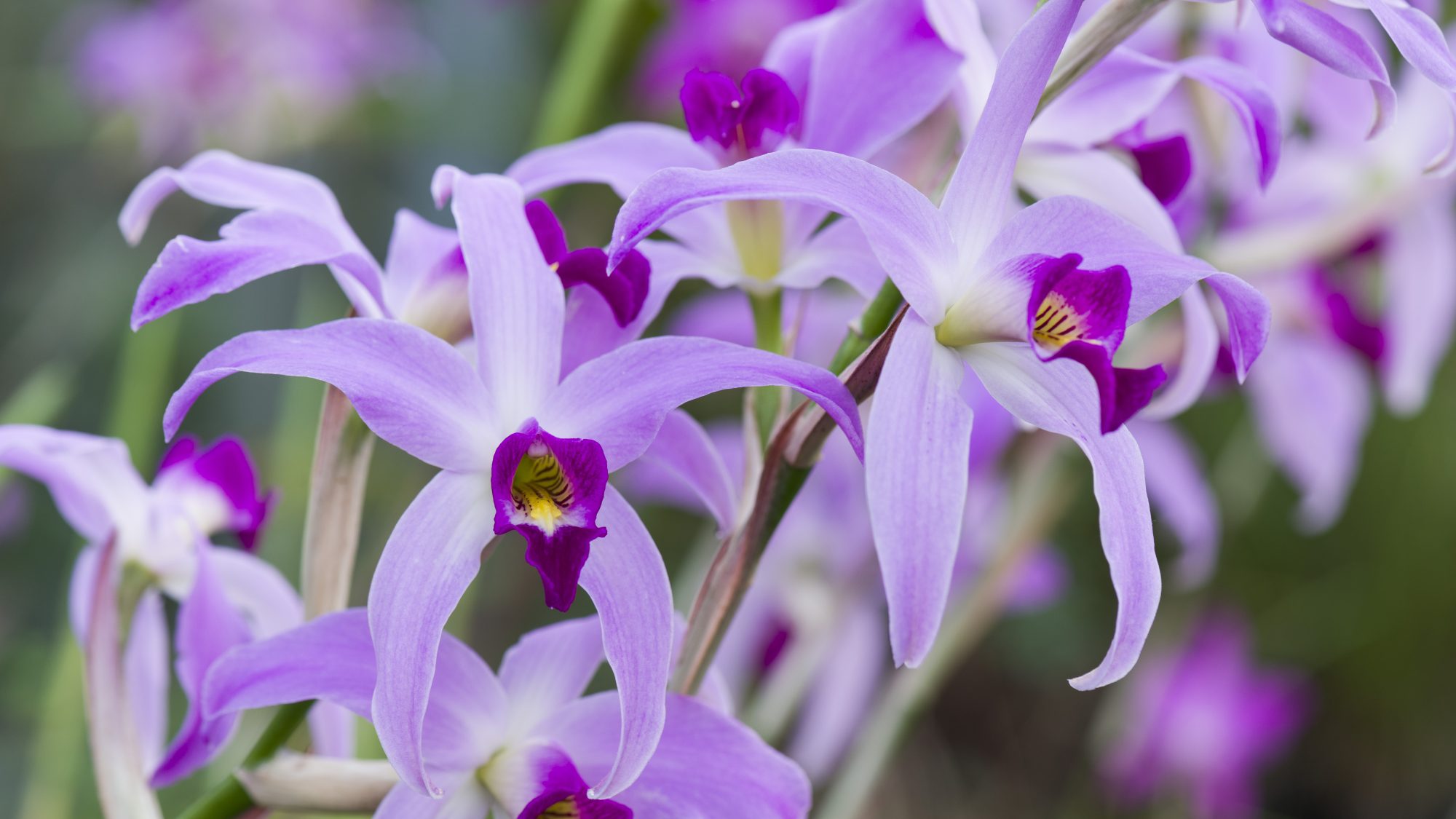
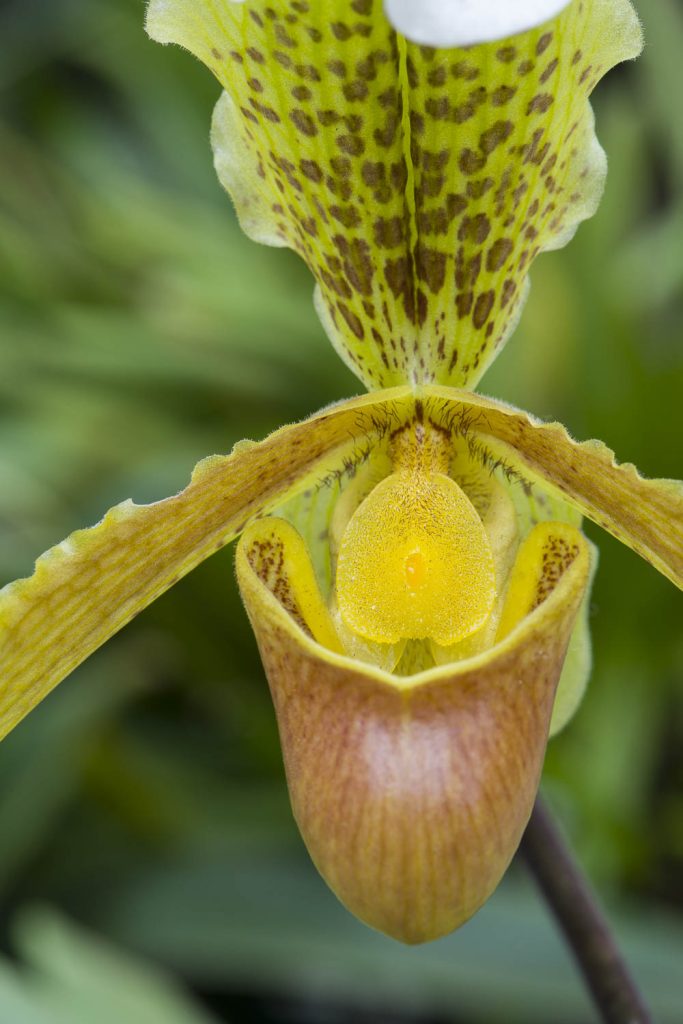
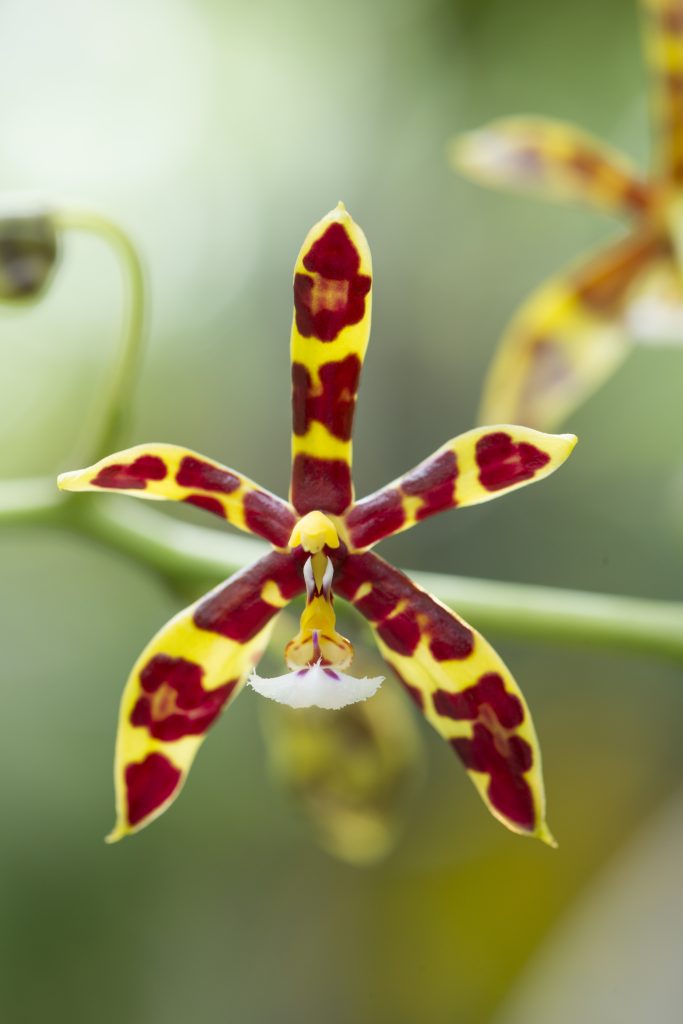
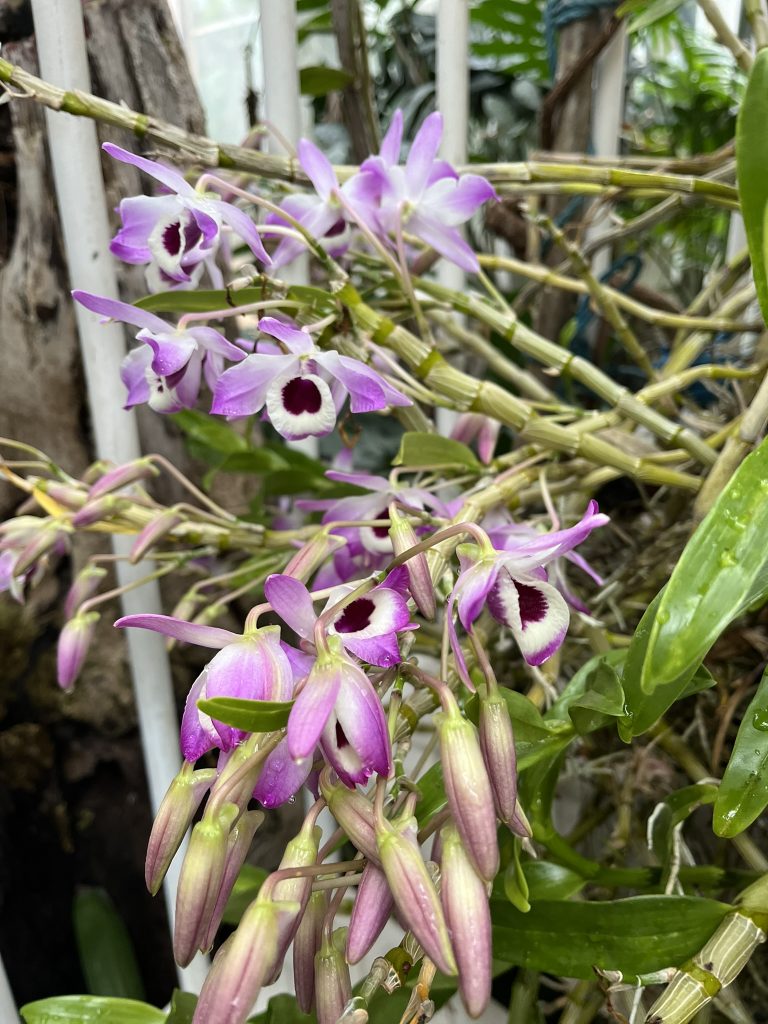
Orchids are either epiphytic or terrestrial in habit. Epiphytic species grow on a host plant, and their aerial roots absorb nutrients and moisture from the air and debris around it. Some epiphytic orchids have swellings at the base of the stems (pseudobulbs) which store water. Terrestrial orchids grow on the ground and their roots absorb nutrients and moisture from the soil. The flowers of orchids are all similar in being twisted 180 degrees (so most orchid flowers are actually blooming upside down!). Most have two lateral petals and a modified petal, or lip, that often serves to attract pollinators and act as a landing pad for them. The diversity of flower shape, colour and size is vast and, given the range of habitats in which they occur, there’s bound to be an orchid to suit most conditions, as well as horticultural experience.
How many native orchid species are there?
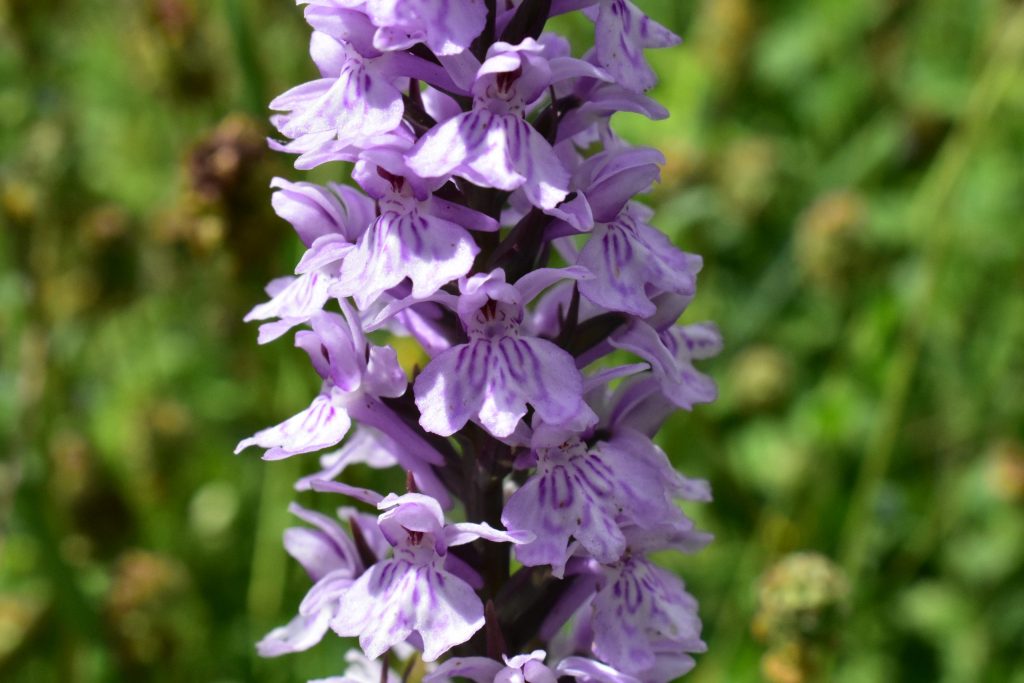
The United Kingdom (UK) has 56 native orchid species, all of which are terrestrial, and summer flowering. Some of these are widespread, such as the common spotted orchid (Dactylorhiza fuchsii) which grows in woodland, verges, marshes, and dunes, and which can occur in great drifts of pink and white in moist, well-drained, both alkaline and acidic soils. Other species are rarer, including the ghost orchid (Epipogium aphyllum). This species occurs in dense pine and deciduous woodland on alkaline and slightly acidic soils. It lacks chlorophyll (the green pigment which provides leaf colour in plants) and instead derives its nutrients from soil mycorrhizal fungi. While the ghost orchid is known in only a few locations in the UK, it is also shy to bloom, producing flower sporadically, and in 2024 it was recorded as having flowered in the UK for the first time since 2009. Such is the scarcity of many orchids globally that their habitats are protected to ensure that populations aren’t lost to habitat destruction, over collection by enthusiastic growers, or to climate change.
What conditions do orchids need to grow?
Cambridge University Botanic Garden has few native terrestrial orchids, though bee orchids appear spontaneously, and we have an established population of the common spotted orchid (Dactylorhiza fuchsia). Our Glasshouses though provide a range of environments in which we grow several hundred species and cultivars from a diversity of habitats and climates across the globe. In cultivation, tender orchids resent standing in water, and require free-draining, composted bark, and should only be watered as the compost dries, so weekly is usually sufficient in summer. Epiphytic species will also grow well mounted onto bark & frequently sprayed with water to maintain a humid atmosphere.
Some genera are familiar, including Phalaenopsis (moth orchids) and Cymbidium cultivars which are readily available, and easily grown at home, even by those who consider themselves horticulturally-challenged. Both of these species require little input provided that they are given the correct conditions: moth orchids thrive in bright light i.e. a south-facing windowsill at temperatures above 16°C, while Cymbidiums prefer slightly cooler temperatures (but at least 10°C), and good light but not direct sunlight i.e. a west or north-facing window. Other genera are more demanding and challenging in cultivation, and some species that we grow here in the Garden are rare in cultivation and in the wild.


Orchids in our collection
Several species are of particular note in our collection. Vanilla planifolia (vanilla) is a trailing orchid growing up to 15m in length and bearing fleshy aerial roots which help it cling to host trees. A native of Mexico, and central and north South America, it grows in lowland tropical forests, though is now rare in its native range due to habitat destruction and over exploitation. Today vanilla is grown more extensively in South America, and also in Java, New Guinea, Malaysia, the Seychelles and Madagascar, though the absence of its natural pollinator means that this species must be pollinated by hand to produce vanilla pods.
Angraecum sesquipedale (Darwin’s orchid) is a tropical epiphytic species from Madagascar. A winter-flowering species this has a waxy-looking white flower with a nectar spur (an elongated part of the flower containing the sugary liquid) of up to 45cm. Darwin predicted that this flower could only be pollinated by one specific insect with a proboscis (tongue) long enough to reach the nectar at the base of the spur. He was correct in this prediction, but it was only after his death that one species of hawkmoth, with a suitably long proboscis, was identified as the pollinator of this plant.
Both of these orchids have a fragrance attractive to humans, but others, such as Bulbophyllum fletcherianum have a malodorous scent to attract pollinating blow flies and carrion beetles in its native New Guinea. This species has a flower cluster up to 30cm across, consisting of 30 individual hooded, deep purple flowers, and is one of the largest orchids, with leaves reaching up to 1.8m in length.
In contrast, Bulbophyllum subpatulum from New Guinea is tiny, with yellow or yellow-brown flowers up to 5mm in diameter, and leaves of only 5 cm in length. You really need to keep your eyes peeled to spot this one in our tropical houses.


Orchid inspiration
This is a mere taster of this vast plant family, but with such an array of flower shape, form and colour it is easy to understand why the exotic orchid species inspire many enthusiasts to specialise in the cultivation of this fascinating family. Some are easy to grow, while others present greater challenges, but if you’re inspired to extend your horticultural boundaries a visit to the Glasshouses at the Botanic Garden will provide orchid inspiration, while organisations such as the Cambridge Orchid Society can offer advice to novices and experts alike.
Gardening jobs for February
- Divide and replant snowdrops after flowering i.e in the green.
- Finish mulching flower and vegetable beds to deter weeds and retain moisture.
- Cut back late-flowering Clematis e.g. viticella group.
- Sow tender tomatoes and chillies which require a long growing season, in a heated propagator, or on a windowsill.
- Prune Buddleia and ornamental elders (Sambucus) to the base to encourage a compact habit.
- Cut back ornamental grasses.