Back to the page
  • Welcome
  • Visit us
    • Visit us
    • Opening times & information
    • Visiting – travel, dogs, toilets, etc.
    • Ticket Prices
    • Pre-book tickets
    • Garden map
    • Group Visits
    • Tours
    • Press and photography
    • The Garden Café
    • The Garden Shop
  • Accessibility
  • What’s on
  • The Garden
    • The Garden
    • About the Garden
    • Horticultural Collections
    • Understanding Plant Labels
    • History of the Garden
    • Wildlife
    • Plant picks of the week
  • Learning
    • Learning
    • Schools
    • Colleges and Universities
    • Short Courses
    • Family Activities
    • Communities
    • Science on Sundays
    • Trails for Adults
    • Certificate in Botanical Horticulture
  • Science
    • Science
    • Our Science Staff
    • Our Staff Publications
    • Your Science
    • Supporting Your Research
    • Phenology Project
  • Collections
    • Collections
    • Living Collections
    • Seed Bank
    • Herbarium
    • Cory Library
    • Archives
    • Living Collections Portal
    • Botanic Dyes
  • News
  • Support Us
  • Friends
    • Friends
    • Join the Friends
    • Friends’ Events
    • Corporate Support and Corporate Friends
    • Gift Memberships
Donate
Cambridge University Botanic Garden
menu

Today's Opening Times:
10:00am - 4:00pm

  • News
  • Support Us
  • Contact Us
  • Donate
  • Home
  • Visit us
    • Ticket Prices
    • Opening times & Information
    • Visiting – travel, dogs, toilets, etc.
    • Garden Map
    • Group Visits
    • Tours
    • Pre-book tickets
    • Press & Photography
    • The Garden Shop
    • The Garden Café
    • Accessibility
    • Virtual Visits
  • What’s on
  • The Garden
    • About the Garden
    • Horticultural Collections
    • Understanding Plant Labels
    • History of the Garden
    • Wildlife
    • Plant picks of the week
  • Learning
    • Schools
    • Colleges and Universities
    • Short Courses
    • Family Activities
    • Communities
    • Science on Sundays
    • Trails for Adults
    • Certificate in Botanical Horticulture
  • Science
    • Our Science Staff
    • Our Staff Publications
    • Your Science
    • Supported Publications
    • Supporting Your Research
    • Phenology Project
  • Collections
    • Living Collections
    • Herbarium
    • Seed Bank
    • Cory Library
    • Archives
    • Collecting Expeditions
    • National Plant Collections ®
    • Living Collections Portal
    • Botanic Dyes
  • Friends
    • Join the Friends
    • Gift Memberships
    • Friends’ Events
    • Corporate Support and Corporate Friends
  • Open search panel
Close search panel
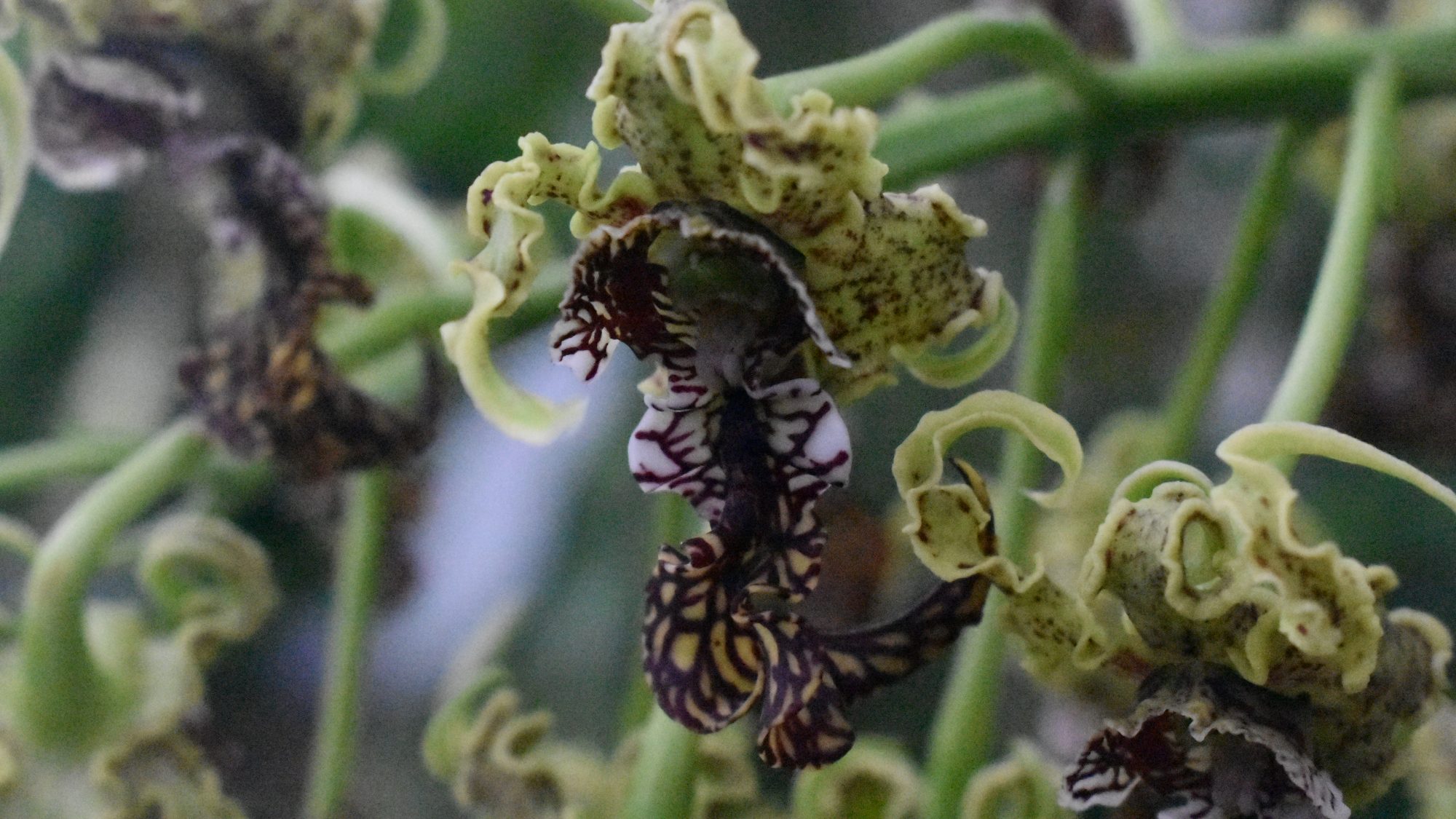
Frilled flower with green and purple colourings.
Home Plants Dendrobium spectabile
Share Created with Sketch.
  • Email Share this with Email
  • Facebook Share this with Facebook
  • Twitter Share this with Twitter
  • Pinterest Share this with Pinterest
  • WhatsApp Share this with WhatsApp
  • Google + Share this with Google plus

Dendrobium spectabile

View plant on map View all plants

This extraordinary orchid can be admired in the Palm House.

Containing over 1600 species the orchid genus Dendrobium occurs in south, east and southeast Asia, Australia and the Pacific Islands. Species grow in low altitude rainforests, or in montane forests over 2000m in altitude. It is highly diverse in form and colour, with species being deciduous or evergreen, and epiphytic or terrestrial. and bearing single to many-flowered racemes or panicles. Dendrobium spectabile is an epiphytic species from rainforests, swamps and moss forests of New Guinea, Papua New Guinea and the Solomon Islands. The flowers are held in racemes with several flowers up to 8cm in length on each stem. The blooms are frilled in appearance, and comprise three outer sepals, and three inner petals, the lower of which is modified into a lip. This species is highly variable in colour, and in this specimen the sepals are green with purple specks, and the petals have a white and green base with purple markings.  In cultivation this species requires warm temperatures, humidity and indirect light.

University of Cambridge Museums and Botanic Garden

Social

  • Follow us on YouTube
  • Follow us on Twitter
  • Follow us on Instagram
  • Follow us on Facebook
  • Follow us on Threads
  • Follow us on LinkedIn

© 2026 Cambridge University Botanic Garden

  • Privacy policy
  • Contact us