Back to the page
  • Welcome
  • Visit us
    • Visit us
    • Opening times & information
    • Visiting – travel, dogs, toilets, etc.
    • Ticket Prices
    • Pre-book tickets
    • Garden map
    • Group Visits
    • Tours
    • Press and photography
    • The Garden Café
    • The Garden Shop
  • Accessibility
  • What’s on
  • The Garden
    • The Garden
    • About the Garden
    • Horticultural Collections
    • Understanding Plant Labels
    • History of the Garden
    • Wildlife
    • Plant picks of the week
  • Learning
    • Learning
    • Schools
    • Colleges and Universities
    • Short Courses
    • Family Activities
    • Communities
    • Science on Sundays
    • Trails for Adults
    • Certificate in Botanical Horticulture
  • Science
    • Science
    • Our Science Staff
    • Our Staff Publications
    • Your Science
    • Supporting Your Research
    • Phenology Project
  • Collections
    • Collections
    • Living Collections
    • Seed Bank
    • Herbarium
    • Cory Library
    • Archives
    • Living Collections Portal
    • Botanic Dyes
  • News
  • Support Us
  • Friends
    • Friends
    • Join the Friends
    • Friends’ Events
    • Corporate Support and Corporate Friends
    • Gift Memberships
  • Cambridge Botanic Lights 2025
    • Cambridge Botanic Lights 2025
    • Cambridge Botanic Lights – Frequently Asked Questions (FAQs) 2025
    • Cambridge Botanic Lights – Accessibility
    • Cambridge Botanic Lights – Photography Competition
Donate
Cambridge University Botanic Garden
menu

Today's Opening Times:
10:00am - 3:30pm

  • News
  • Support Us
  • Contact Us
  • Donate
  • Home
  • Visit us
    • Ticket Prices
    • Opening times & Information
    • Visiting – travel, dogs, toilets, etc.
    • Garden Map
    • Group Visits
    • Tours
    • Pre-book tickets
    • Press & Photography
    • The Garden Shop
    • The Garden Café
    • Accessibility
    • Virtual Visits
  • What’s on
  • The Garden
    • About the Garden
    • Horticultural Collections
    • Understanding Plant Labels
    • History of the Garden
    • Wildlife
    • Plant picks of the week
  • Learning
    • Schools
    • Colleges and Universities
    • Short Courses
    • Family Activities
    • Communities
    • Science on Sundays
    • Trails for Adults
    • Certificate in Botanical Horticulture
  • Science
    • Our Science Staff
    • Our Staff Publications
    • Your Science
    • Supported Publications
    • Supporting Your Research
    • Phenology Project
  • Collections
    • Living Collections
    • Herbarium
    • Seed Bank
    • Cory Library
    • Archives
    • Collecting Expeditions
    • National Plant Collections ®
    • Living Collections Portal
    • Botanic Dyes
  • Friends
    • Join the Friends
    • Gift Memberships
    • Friends’ Events
    • Corporate Support and Corporate Friends
  • Cambridge Botanic Lights 2025
    • Cambridge Botanic Lights – Frequently Asked Questions (FAQs) 2025
    • Cambridge Botanic Lights – Accessibility
    • Cambridge Botanic Lights – Photography Competition
  • Open search panel
Close search panel
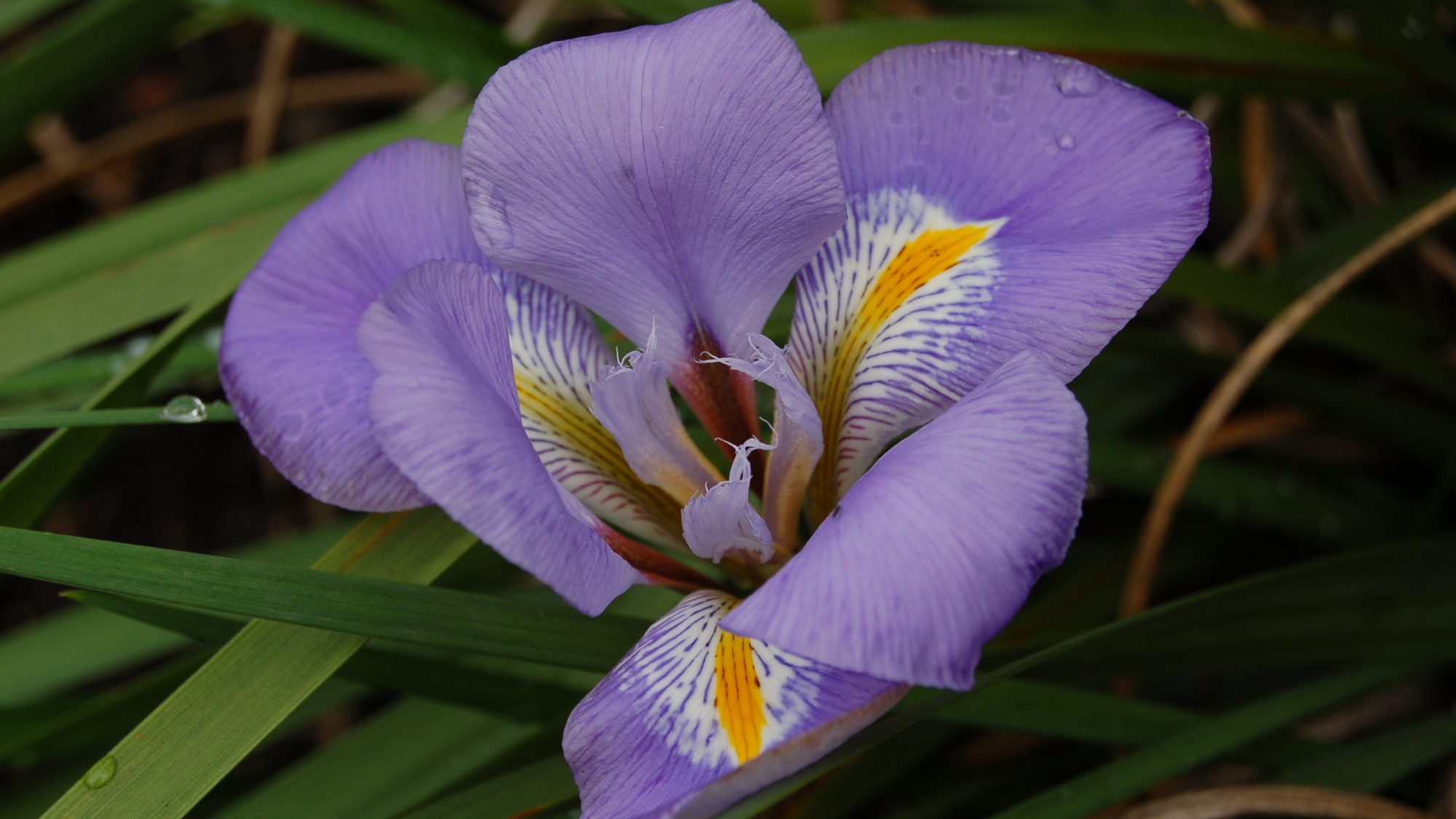
Mauve flower with yellow and white streak in the outer petals.
Home Plants Iris unguicularis
Share Created with Sketch.
  • Email Share this with Email
  • Facebook Share this with Facebook
  • Twitter Share this with Twitter
  • Pinterest Share this with Pinterest
  • WhatsApp Share this with WhatsApp
  • Google + Share this with Google plus

Iris unguicularis

View plant on map View all plants

The winter flowering Iris unguicularis provides welcome herbaceous interest in the centre of the Systematic Beds.

Iris unguicularis is a vigorous beardless iris from the Mediterranean, though it is prolific in Algeria, hence the common name Algerian iris. It produces a dense mat of rhizomes on the soil surface, from which emerge narrow, grass-like leaves to 60cm in length. The large flowers are either stemless, or are held on short stems, and nestle amidst the foliage, and provide colour through the winter months. They are variable in colour from pale lavender to deep blue, with a central band of yellow markings on the falls. This species favours poor, well-drained soils and a sunny location, and is often seen growing well at the base of south-facing walls. When happy it will continue to produce a succession of flower from autumn through to spring. The genus occurs throughout the temperate northern hemisphere, and contains over 300 species of bulbous and rhizomatous species.

University of Cambridge Museums and Botanic Garden

Social

  • Follow us on YouTube
  • Follow us on Twitter
  • Follow us on Instagram
  • Follow us on Facebook
  • Follow us on Threads
  • Follow us on LinkedIn

© 2025 Cambridge University Botanic Garden

  • Privacy policy
  • Contact us