Back to the page
  • Welcome
  • Visit us
    • Visit us
    • Opening times & information
    • Visiting – travel, dogs, toilets, etc.
    • Ticket Prices
    • Pre-book tickets
    • Garden map
    • Group Visits
    • Tours
    • Press and photography
    • The Garden Café
    • The Garden Shop
  • Accessibility
  • What’s on
  • The Garden
    • The Garden
    • About the Garden
    • Horticultural Collections
    • Understanding Plant Labels
    • History of the Garden
    • Wildlife
    • Plant picks of the week
  • Learning
    • Learning
    • Schools
    • Colleges and Universities
    • Short Courses
    • Family Activities
    • Communities
    • Science on Sundays
    • Trails for Adults
    • Certificate in Botanical Horticulture
  • Science
    • Science
    • Our Science Staff
    • Our Staff Publications
    • Your Science
    • Supporting Your Research
    • Phenology Project
  • Collections
    • Collections
    • Living Collections
    • Seed Bank
    • Herbarium
    • Cory Library
    • Archives
    • Living Collections Portal
    • Botanic Dyes
  • News
  • Support Us
  • Friends
    • Friends
    • Join the Friends
    • Friends’ Events
    • Corporate Support and Corporate Friends
    • Gift Memberships
  • Cambridge Botanic Lights 2025
    • Cambridge Botanic Lights 2025
    • Cambridge Botanic Lights – Frequently Asked Questions (FAQs) 2025
    • Cambridge Botanic Lights – Accessibility
    • Cambridge Botanic Lights – Photography Competition
Donate
Cambridge University Botanic Garden
menu

Today's Opening Times:
10:00am - 3:30pm

  • News
  • Support Us
  • Contact Us
  • Donate
  • Home
  • Visit us
    • Ticket Prices
    • Opening times & Information
    • Visiting – travel, dogs, toilets, etc.
    • Garden Map
    • Group Visits
    • Tours
    • Pre-book tickets
    • Press & Photography
    • The Garden Shop
    • The Garden Café
    • Accessibility
    • Virtual Visits
  • What’s on
  • The Garden
    • About the Garden
    • Horticultural Collections
    • Understanding Plant Labels
    • History of the Garden
    • Wildlife
    • Plant picks of the week
  • Learning
    • Schools
    • Colleges and Universities
    • Short Courses
    • Family Activities
    • Communities
    • Science on Sundays
    • Trails for Adults
    • Certificate in Botanical Horticulture
  • Science
    • Our Science Staff
    • Our Staff Publications
    • Your Science
    • Supported Publications
    • Supporting Your Research
    • Phenology Project
  • Collections
    • Living Collections
    • Herbarium
    • Seed Bank
    • Cory Library
    • Archives
    • Collecting Expeditions
    • National Plant Collections ®
    • Living Collections Portal
    • Botanic Dyes
  • Friends
    • Join the Friends
    • Gift Memberships
    • Friends’ Events
    • Corporate Support and Corporate Friends
  • Cambridge Botanic Lights 2025
    • Cambridge Botanic Lights – Frequently Asked Questions (FAQs) 2025
    • Cambridge Botanic Lights – Accessibility
    • Cambridge Botanic Lights – Photography Competition
  • Open search panel
Close search panel
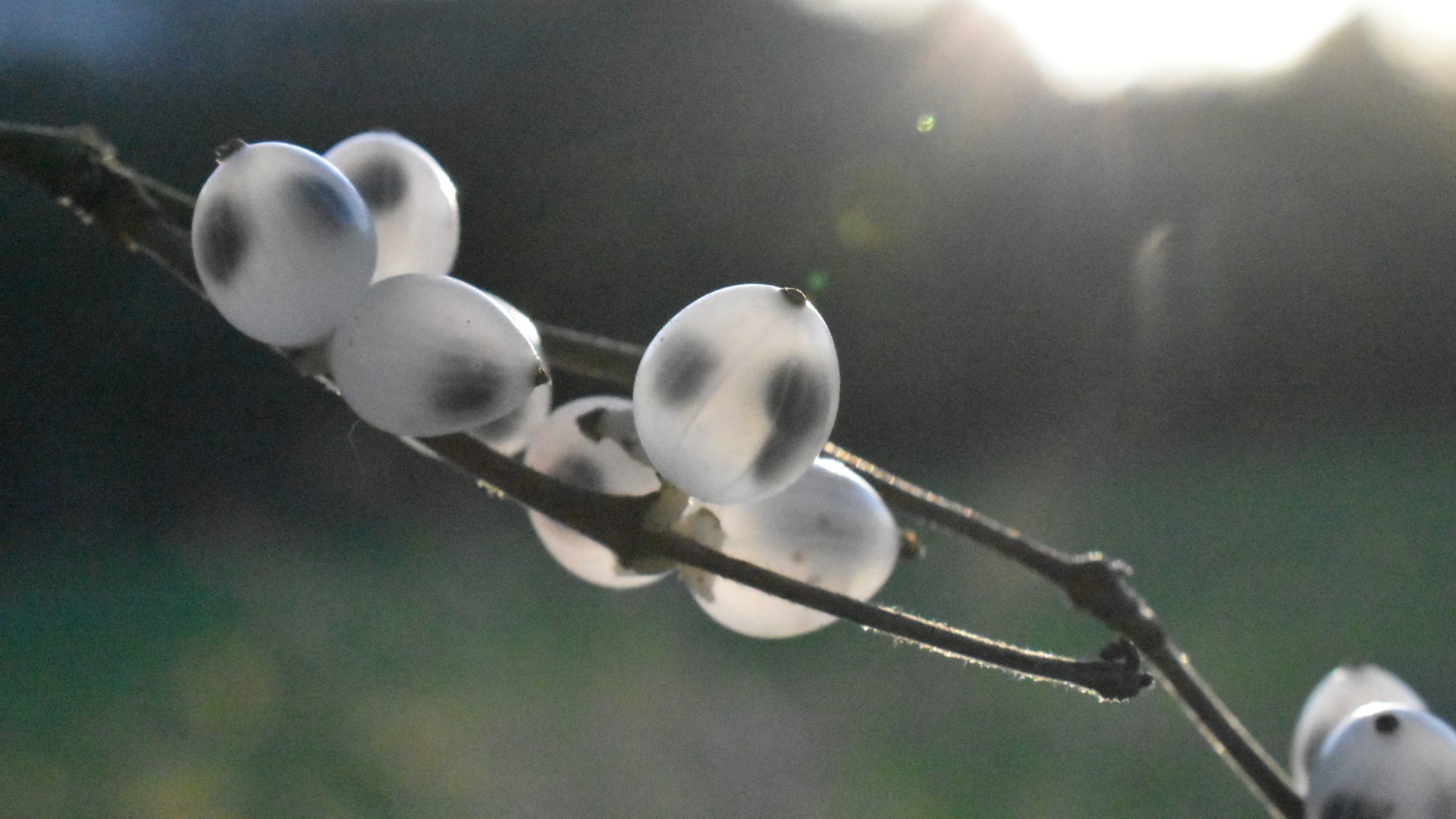
Translucent berries on a twig.
Home Plants Lonicera quinquelocularis
Share Created with Sketch.
  • Email Share this with Email
  • Facebook Share this with Facebook
  • Twitter Share this with Twitter
  • Pinterest Share this with Pinterest
  • WhatsApp Share this with WhatsApp
  • Google + Share this with Google plus

Lonicera quinquelocularis

View plant on map View all plants

The discreet fruits of this shrubby honeysuckle glisten in the winter sun beside Bateson Walk.

The genus Lonicera comprises approximately 160 species of woody shrubs and climbers from the northern hemisphere. The climbing honeysuckles are familiar to many for their attractive, scented flowers, and a number of the shrubby species are admired for their fragrant winter flowers. Lonicera quinquelocularis is a large, robust shrub reaching 5m in height and spread, and displaying arching stems. In summer two-lipped, cream-yellow flowers are produced in the leaf axils, and these are followed by small clusters or single, translucent fruits, which persist into winter. These catch winter sunlight and clearly show the seeds held inside the berries. A native of the Indian subcontinent and west Asia, this is a hardy shrub.

University of Cambridge Museums and Botanic Garden

Social

  • Follow us on YouTube
  • Follow us on Twitter
  • Follow us on Instagram
  • Follow us on Facebook
  • Follow us on Threads
  • Follow us on LinkedIn

© 2025 Cambridge University Botanic Garden

  • Privacy policy
  • Contact us