Back to the page
  • Welcome
  • Visit us
    • Visit us
    • Opening times & information
    • Visiting – travel, dogs, toilets, etc.
    • Ticket Prices
    • Pre-book tickets
    • Garden map
    • Group Visits
    • Tours
    • Press and photography
    • The Garden Café
    • The Garden Shop
  • Accessibility
  • What’s on
  • The Garden
    • The Garden
    • About the Garden
    • Horticultural Collections
    • Understanding Plant Labels
    • History of the Garden
    • Wildlife
    • Plant picks of the week
  • Learning
    • Learning
    • Schools
    • Colleges and Universities
    • Short Courses
    • Family Activities
    • Communities
    • Science on Sundays
    • Trails for Adults
    • Certificate in Botanical Horticulture
  • Science
    • Science
    • Our Science Staff
    • Our Staff Publications
    • Your Science
    • Supporting Your Research
    • Phenology Project
  • Collections
    • Collections
    • Living Collections
    • Seed Bank
    • Herbarium
    • Cory Library
    • Archives
    • Living Collections Portal
    • Botanic Dyes
  • News
  • Support Us
  • Friends
    • Friends
    • Join the Friends
    • Friends’ Events
    • Corporate Support and Corporate Friends
    • Gift Memberships
  • Cambridge Botanic Lights 2025
    • Cambridge Botanic Lights 2025
    • Cambridge Botanic Lights – Frequently Asked Questions (FAQs) 2025
    • Cambridge Botanic Lights – Accessibility
    • Cambridge Botanic Lights – Photography Competition
Donate
Cambridge University Botanic Garden
menu

Today's Opening Times:
10:00am - 3:30pm

  • News
  • Support Us
  • Contact Us
  • Donate
  • Home
  • Visit us
    • Ticket Prices
    • Opening times & Information
    • Visiting – travel, dogs, toilets, etc.
    • Garden Map
    • Group Visits
    • Tours
    • Pre-book tickets
    • Press & Photography
    • The Garden Shop
    • The Garden Café
    • Accessibility
    • Virtual Visits
  • What’s on
  • The Garden
    • About the Garden
    • Horticultural Collections
    • Understanding Plant Labels
    • History of the Garden
    • Wildlife
    • Plant picks of the week
  • Learning
    • Schools
    • Colleges and Universities
    • Short Courses
    • Family Activities
    • Communities
    • Science on Sundays
    • Trails for Adults
    • Certificate in Botanical Horticulture
  • Science
    • Our Science Staff
    • Our Staff Publications
    • Your Science
    • Supported Publications
    • Supporting Your Research
    • Phenology Project
  • Collections
    • Living Collections
    • Herbarium
    • Seed Bank
    • Cory Library
    • Archives
    • Collecting Expeditions
    • National Plant Collections ®
    • Living Collections Portal
    • Botanic Dyes
  • Friends
    • Join the Friends
    • Gift Memberships
    • Friends’ Events
    • Corporate Support and Corporate Friends
  • Cambridge Botanic Lights 2025
    • Cambridge Botanic Lights – Frequently Asked Questions (FAQs) 2025
    • Cambridge Botanic Lights – Accessibility
    • Cambridge Botanic Lights – Photography Competition
  • Open search panel
Close search panel
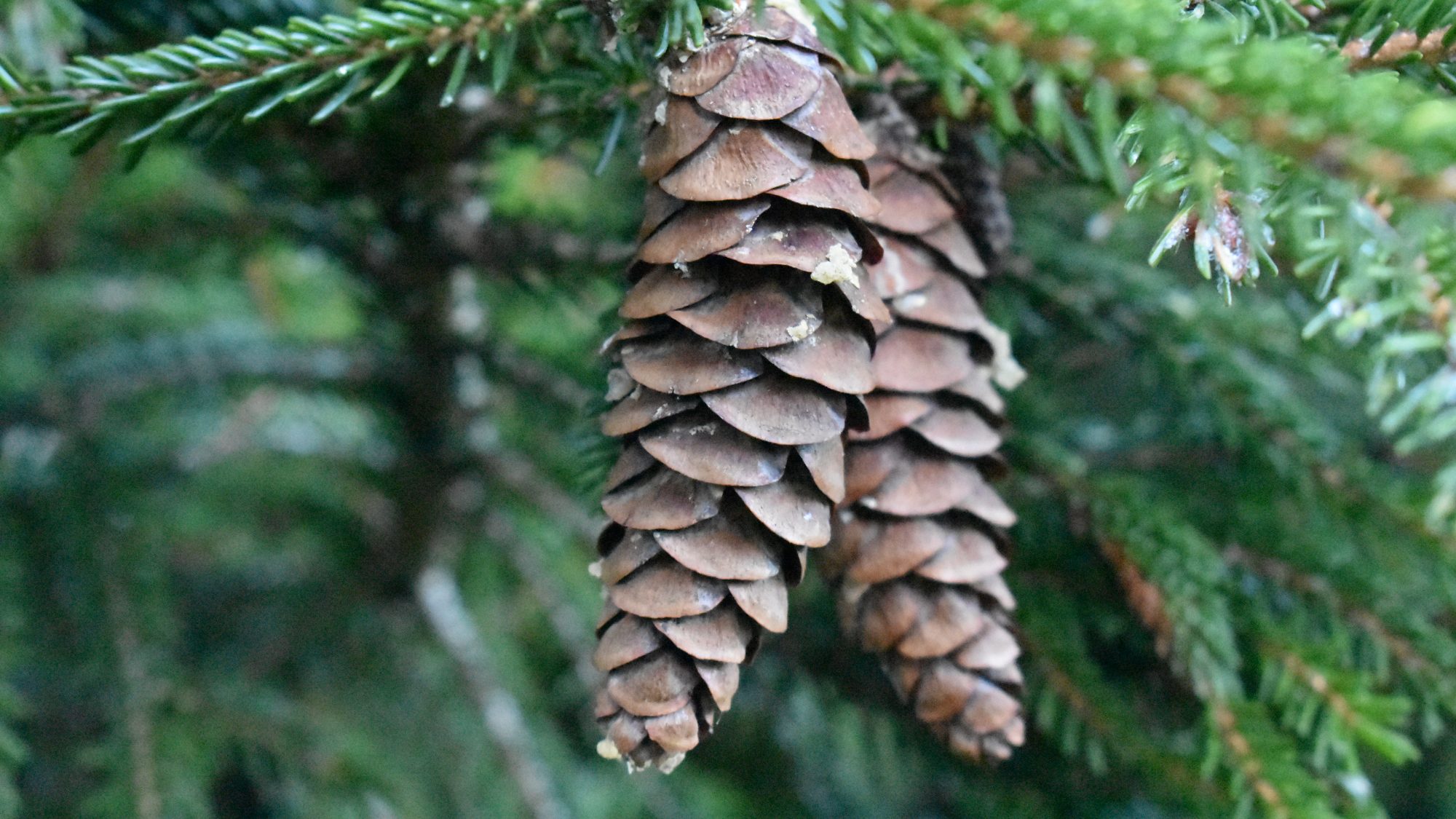
Pendent, rich brown cones.
Home Plants Picea orientalis
Share Created with Sketch.
  • Email Share this with Email
  • Facebook Share this with Facebook
  • Twitter Share this with Twitter
  • Pinterest Share this with Pinterest
  • WhatsApp Share this with WhatsApp
  • Google + Share this with Google plus

Picea orientalis

View plant on map View all plants

This large spruce is bearing cones in the New Pinetum.

The spruces are an evergreen genus from cold regions of the northern hemisphere, bearing needle-like leaves, male pollen cones, and larger woody, female cones. The oriental spruce (Picea orientalis) forms a narrow pyramid or column to 60m in height. The leaves are a dark glossy green in colour, and bear lines of stomata along the upper and lower surfaces. The pollen cones are approximately 2cm in length, and the pendulous, narrow seed cones have broad, open scales, are red-brown in colour, and reach 10cm in length. A native of the Caucasus and western Asia, P. orientalis grows in mountains up to 2100m above sea level, where it experiences dry summers and wet winters, but it is adaptable in cultivation, growing well at lower altitudes, in milder, wet and dry climates, and in a range of soil types from alkaline to acidic.  It is believed that this species was introduced to the British Isles in the 1820’s, where it is known to have been widely grown by the 1850’s.

University of Cambridge Museums and Botanic Garden

Social

  • Follow us on YouTube
  • Follow us on Twitter
  • Follow us on Instagram
  • Follow us on Facebook
  • Follow us on Threads
  • Follow us on LinkedIn

© 2025 Cambridge University Botanic Garden

  • Privacy policy
  • Contact us