Back to the page
  • Welcome
  • Visit us
    • Visit us
    • Opening times & information
    • Visiting – travel, dogs, toilets, etc.
    • Ticket Prices
    • Buy tickets
    • Garden map
    • Group Visits
    • Tours
    • Press and photography
    • The Garden Café
    • Garden Shops
  • Accessibility
  • What’s on
  • The Garden
    • The Garden
    • About the Garden
    • Horticultural Collections
    • Understanding Plant Labels
    • History of the Garden
    • Wildlife
    • Plant picks of the week
  • Learning
    • Learning
    • Short Courses
    • Certificate in Horticulture
    • Certificate in Botany
    • Schools
    • Colleges and Universities
    • Family Activities
    • Communities
    • Science on Sundays
    • Trails for Adults
  • Science
    • Science
    • Our Science Staff
    • Our Staff Publications
    • Your Science
    • Supporting Your Research
    • Phenology Project
  • Collections
    • Collections
    • Living Collections
    • Seed Bank
    • Herbarium
    • Cory Library
    • Archives
    • Living Collections Portal
    • Botanic Dyes
  • News
  • Support Us
  • Friends
    • Friends
    • Join the Friends
    • Friends’ Events
    • Corporate Support and Corporate Friends
    • Gift Memberships
  • Talking Plants
    • Talking Plants
    • Talking Plants – Frequently Asked Questions (FAQs)
Donate

Help us improve our website by taking our 2 minute survey! Start survey

Cambridge University Botanic Garden
menu

Today's Opening Times:
10:00am - 5:00pm

  • News
  • Support Us
  • Contact Us
  • Donate
  • Home
  • Visit us
    • Opening times & Information
    • Buy tickets
    • Ticket Prices
    • Visiting – travel, dogs, toilets, etc.
    • Garden Map
    • Group Visits
    • Tours
    • Press & Photography
    • Garden Shops
    • The Garden Café
    • Accessibility
    • Virtual Visits
  • What’s on
  • The Garden
    • About the Garden
    • Horticultural Collections
    • Understanding Plant Labels
    • History of the Garden
    • Wildlife
    • Plant picks of the week
  • Learning
    • Short Courses
    • Certificate in Horticulture
    • Certificate in Botany
    • Schools
    • Colleges and Universities
    • Family Activities
    • Communities
    • Science on Sundays
    • Trails for Adults
  • Science
    • Our Science Staff
    • Our Staff Publications
    • Your Science
    • Supported Publications
    • Supporting Your Research
    • Phenology Project
  • Collections
    • Living Collections
    • Herbarium
    • Seed Bank
    • Cory Library
    • Archives
    • Collecting Expeditions
    • National Plant Collections ®
    • Living Collections Portal
    • Botanic Dyes
  • Friends
    • Join the Friends
    • Gift Memberships
    • Friends’ Events
    • Corporate Support and Corporate Friends
  • Talking Plants
    • Talking Plants – Frequently Asked Questions (FAQs)
  • Open search panel
Close search panel
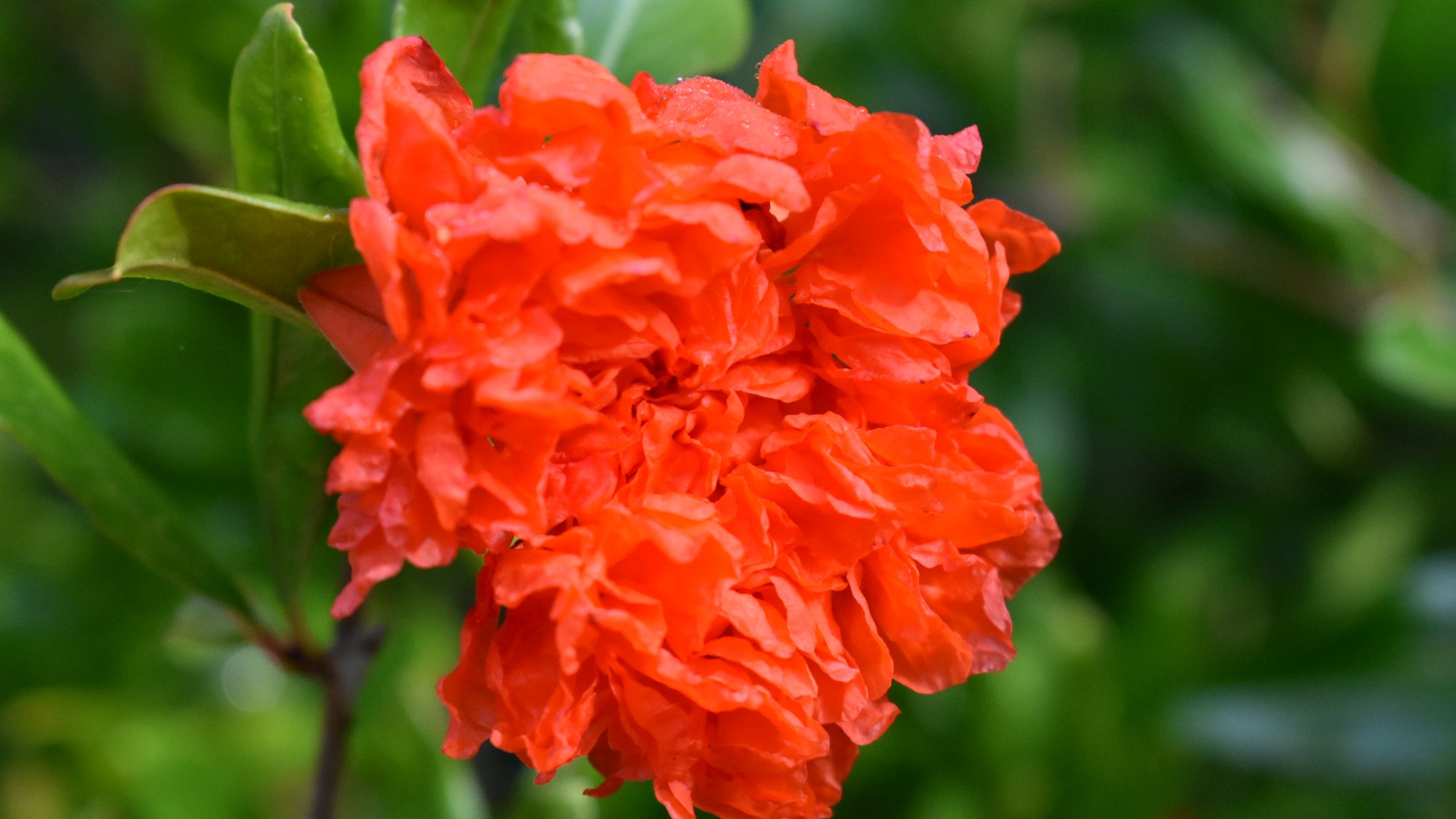
Brilliant orange, double flower.
Home Plants Punica granatum ‘Flore Plena’
Share Created with Sketch.
  • Email Share this with Email
  • Facebook Share this with Facebook
  • Twitter Share this with Twitter
  • Pinterest Share this with Pinterest
  • WhatsApp Share this with WhatsApp
  • Google + Share this with Google plus

Punica granatum ‘Flore Plena’

View all plants

The brilliantly coloured blooms of this shrub can be admired beside Cory Lodge.

The pomegranate (Punica granatum) is one of only two species of deciduous shrubs, both bearing narrow leaves. P. granatum is naturally distributed from south east Europe and south west Asia to Yemen. Though it has attractive flowers it is best known as the source of pomegranates. It can reach up to 6m in height and spread, has glossy foliage and produces funnel-shaped, five-petalled flowers of brilliant orange-red. This double-flowered selection (‘Flore Plena’) has a mass of petals and bears no resemblance to the funnel-shaped flowers of other members of the loosestrife family (Lythraceae), to which it belongs. Though it will grow in our climate it is unlikely to produce edible fruit, preferring warmer conditions to ensure fruits ripen.

University of Cambridge Museums and Botanic Garden

Social

  • Follow us on YouTube
  • Follow us on Twitter
  • Follow us on Instagram
  • Follow us on Facebook
  • Follow us on Threads
  • Follow us on LinkedIn

© 2026 Cambridge University Botanic Garden

  • Privacy policy
  • Contact us