
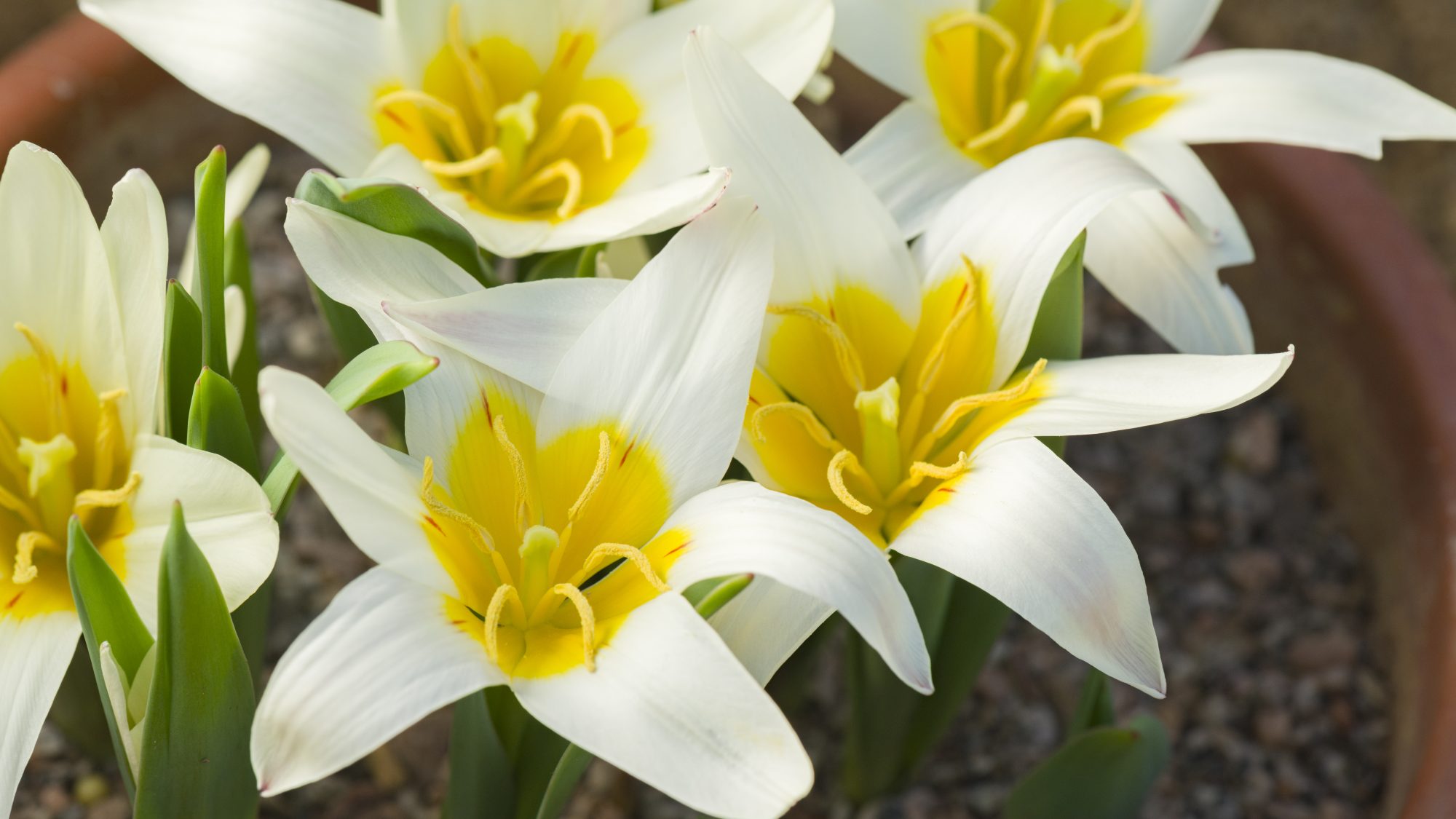
Whilst the first species tulips come into flower this March, visitors to the Mountains House can discover more about these familiar spring blooms as we connect a small selection of tulips in our Glasshouses with their wild relatives across Central Asia.
A new interpretation display introduces the Green Status of Species (GSS) – a global conservation tool which can tell us about the wild ancestors of our garden tulips and is helping scientists understand how close species are to recovery in the wild. These are among the first GSS assessments for plants.
The display, consisting of a new interpretation board and accompanying green plant labels, will highlight each species’ Green Status assessment and explain what has been learnt. Visitors will also be able to take away a leaflet with more information.
For decades, the International Union for Conservation of Nature (IUCN) Red List has classified species by their extinction risk, for example designating them as Vulnerable, Endangered or Critically Endangered. The Green Status asks a different question: how well is a species recovering and how successful is the conservation of that species?
This work on tulips has been developed in collaboration with the IUCN Species Survival Commission (SSC) Wild Tulip Specialist Group – an international partnership of researchers and conservationists, including many working in Central Asia.
“The Green Status shifts the focus from simply preventing extinction to aiming for recovery and restoration. It highlights where conservation has worked, where species remain dependent on human support and where there is potential for improvement.”
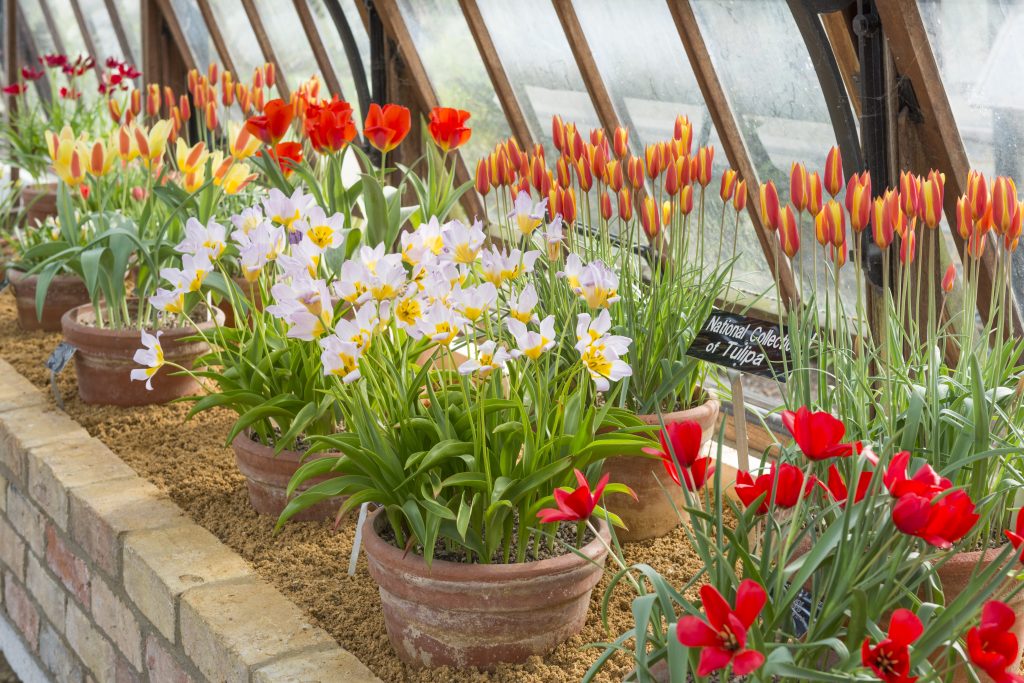
Plant conservationists Brett Wilson and Ben Fisk – both former Cambridge University Department of Plant Sciences researchers – explain how the Green Status of species tulips is shaping our understanding of wild tulip conservation:
When most of us think of tulips, we picture vibrant spring borders or the iconic, colourful, striped fields of the Netherlands. However, many of the showy garden varieties trace their roots back to tough wild species growing in the mountains, steppes and semi-deserts of Central Asia.
This new conservation assessment suggests those wild ancestors are far from flourishing.
The findings come from the IUCN’s Green Status of Species, which was formally introduced in 2021. This tool complements the IUCN Red List and is designed to measure not just extinction risk, but how close a species is to full recovery across its natural range.
Using this framework, we, alongside wild tulip experts in Central Asia, have collaborated with the Botanic Garden to produce some of the first plant assessments under the scheme – focusing on three key wild tulips:
- Tulipa greigii
- Tulipa kaufmanniana
- Tulipa fosteriana
These species are important ancestors of many commercial tulip varieties and are central to modern horticulture.
Although none of them are considered at imminent risk of extinction under the Red List, the new Green Status assessments tell a sobering story. All three were classified as ’Largely Depleted’ – meaning they exist well below their estimated natural state across their ancestral range.
In practical terms, that means populations have shrunk, disappeared from parts of their historic distribution, or no longer play their full ecological role in the landscape.


Applying the Green Status of Species assessment to tulips has come with challenges as the process is complex and there are very few examples of previously assessed plants to learn from. First, we estimated each species’ historical natural range – before major human pressures such as agriculture and development. Then we divided this range into biologically meaningful regions and evaluated how tulips in each region were doing, thinking about whether they were absent, declining, stable or fully functional within their ecosystems. We also explored the effects of current and former conservation efforts, estimating how each species would look today had these interventions not taken place.
The results suggest that while protected areas and conservation efforts have helped in places, they have not significantly reversed long-term declines associated with the impacts of mining, agriculture, poaching and urban development.


“By combining Red List extinction risk with Green Status recovery scores, conservationists now have a more complete picture: not just whether wild tulips might disappear, but how far they are from reclaiming their rightful place in the wild and what we can do to make this happen.”
Why does this matter?
The Green Status shifts the focus from simply preventing extinction to aiming for recovery and restoration. It highlights where conservation has worked, where species remain dependent on human support and where there is potential for improvement.
These wild tulip assessments are among the first ever completed for plant species under the Green Status framework. By combining Red List extinction risk with Green Status recovery scores, conservationists now have a more complete picture: not just whether wild tulips might disappear, but how far they are from reclaiming their rightful place in the wild and what we can do to make this happen.
The assessments highlight that species not currently labelled ‘threatened’ may still require attention. They may be safe from the threat of imminent extinction, but they are far from thriving and should not be overlooked.
The hope is that this clearer picture will lead to more targeted, effective conservation, ensuring that the wild tulips behind our colourful spring gardens can once again flourish in their native landscapes.
More details about the Green Status assessment tool can be found in the specialist group’s most recent blog post: How can the Green Status of Species Help Inform the Conservation of Wild Tulips – IUCN SSC Wild Tulip Specialist Group.


