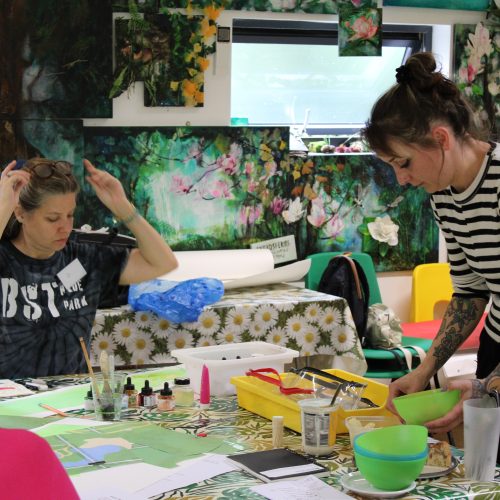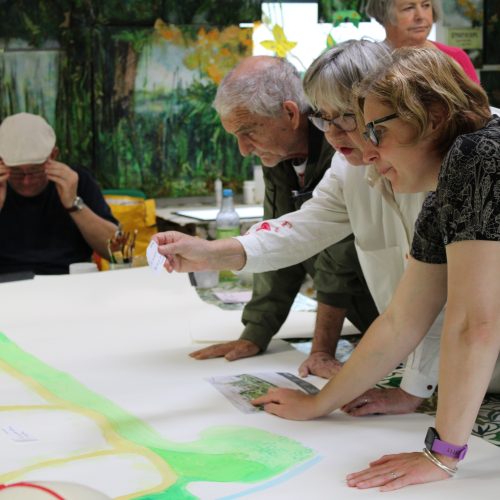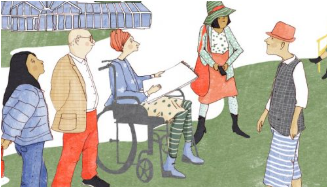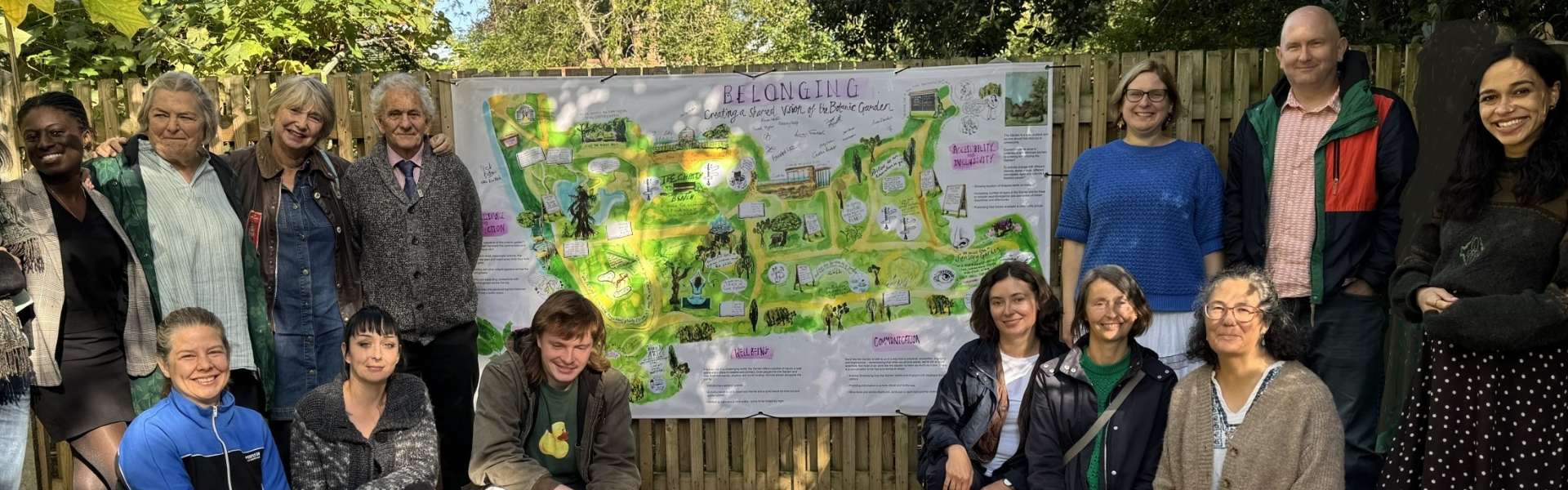
As part of the growing community programme at the Cambridge University Botanic Garden, the Garden’s Learning Team enlisted community members to contribute their vision for the future of the Botanic Garden. The 15 members, from 5 diverse local organisations, explored ways to improve community spaces and engagement in the Garden to make the Garden as inclusive and accessible as possible. Together they created an illustrated map to highlight suggested ways in which the Garden could enhance the local community’s sense of belonging within the site.
“We are now two years into our community programme and rather than imposing what we thought the community wanted, we engaged with our community visitors, so they could share their experiences and sense of belonging.”
The 10-week-long Community Participatory Research Project included 11 workshops funded by a Collections Connections Communities (CCC) UKRI research grant. The project sought to empower community members as co-researchers, exploring their motivations, needs and aspirations in engaging with the Garden and actively involved them in shaping the Garden’s future landscape.
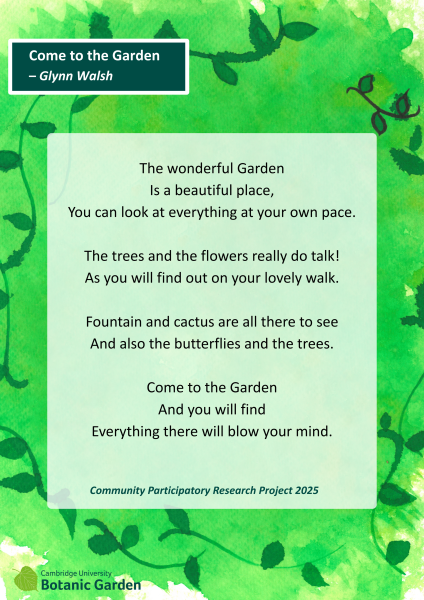
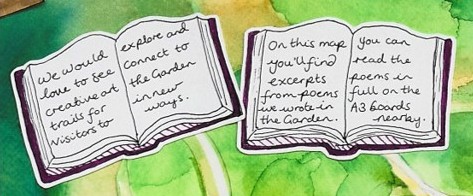
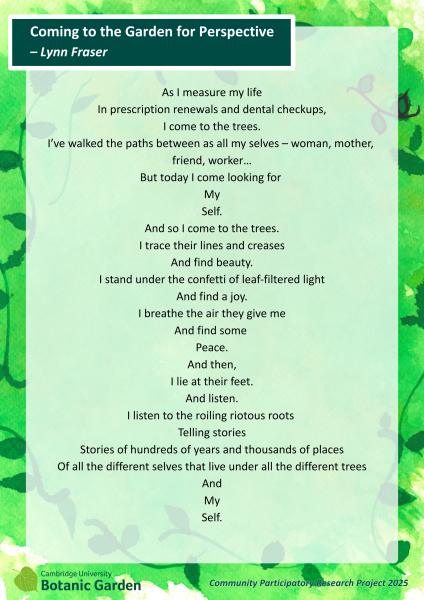
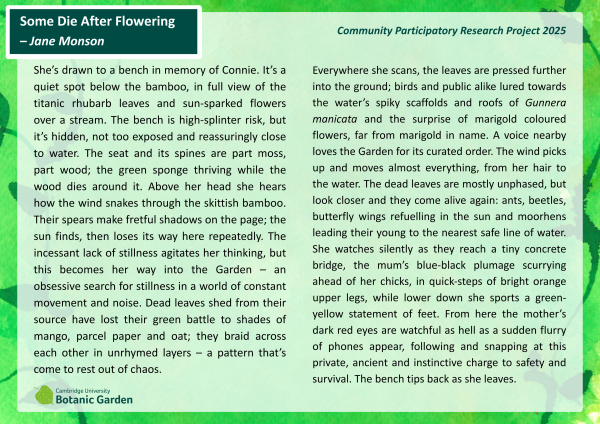
The culmination of the co-researchers’ sessions includes an imaginative illustrated map, produced with the help of local artist Annabel Lee, and a series of poems inspired by the Garden.
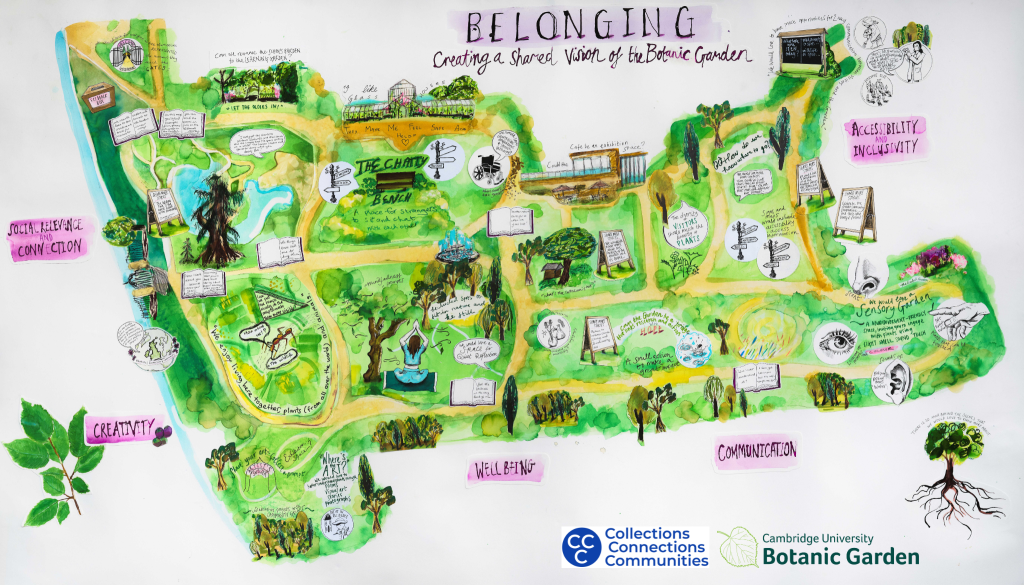
The map (above) captures the five themes that arose in the co-researchers’ discussions – 1. Social relevance and connection; 2. Communication; 3. Accessibility and inclusivity; 4. Wellbeing; and 5. Creativity.
Five themes
1. Social Relevance and Connections
What is the social relevance of this botanic garden? How can the Garden represent the communities and visitors of an unequal city?
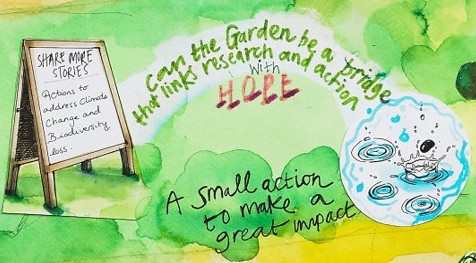
The answers could lie in small, meaningful actions that make visitors feel seen and heard every time they walk through the gates:
- Grow and expand connections with community groups across the city
- Break down the perceived barriers between research and a public space
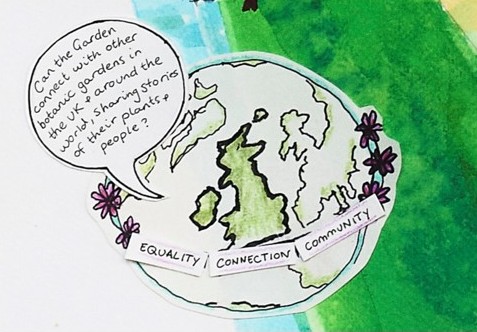
- Connect with other botanic gardens across the UK and globally
2. Creativity
In all its forms, art is a powerful form of expression that brings connection and joy. How could art and artists flourish in the Garden?
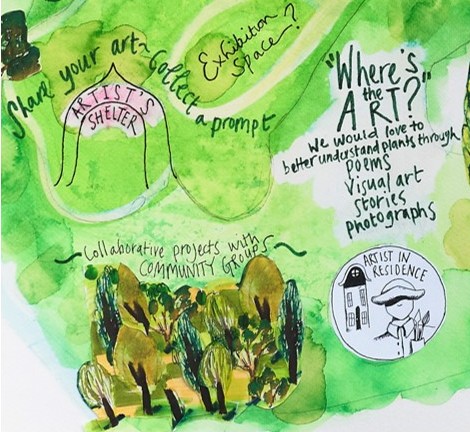
The Garden is full of stories – real and imagined, known and yet to be discovered. How could artists help to share these stories and be inspired by them? Suggestions included:
- Introduce signs that tell untold stories behind some of the plants
- Validate the links between art and research to bring the research to life
- Create connections and opportunities between artists, writers and botanic researchers
3. Wellbeing
In a busy city in a challenging world, the Garden offers a pocket of nature, a safe space and a place to breathe and connect.
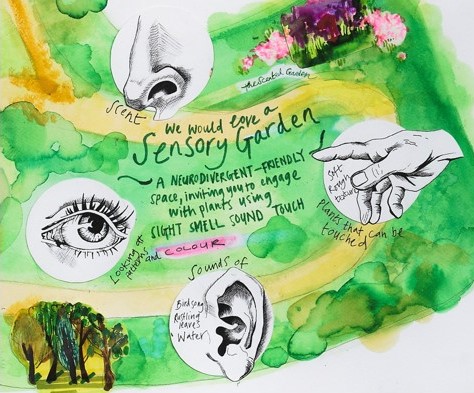
Could we draw people into the Garden and help them find mental, physical and social healing? How could we nurture people alongside the plants? Perhaps:
- Introduce a sensory garden
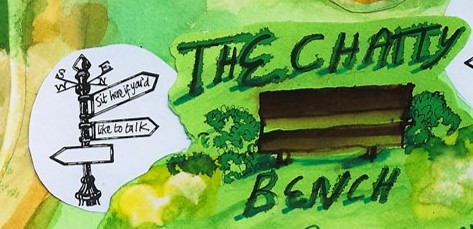
- Designate a chatty bench for visitors to sit on to meet new friends and a quiet bench for time out and contemplation
- Create wellbeing trails and guided walks – some to be hosted by night
4. Communication
We’d like the Garden to talk to us in a way that is practical, accessible, engaging and inspirational – remembering that while we all love plants, we’re not all plant scientists.
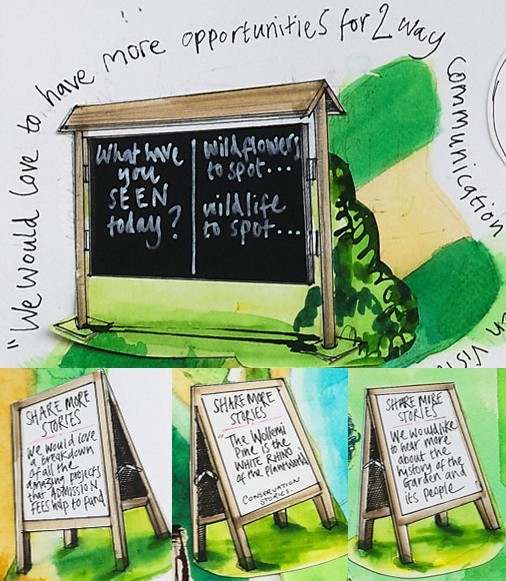
But most of all, we’d like the Garden to listen as much as it tells. There is a conversation to be had and stories to share. How could we:
- Actively diversify how the Garden seeks and engages with feedback from visitors
- Provide information in a more visual and tactile way
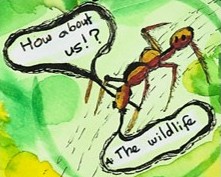
- Display more texts and stories, particular to each bed and the wildlife
5. Accessibility & Inclusivity
The Garden is a special place and no one should feel shut out or unwelcome.
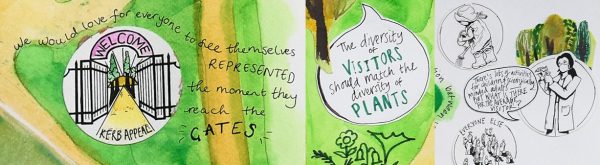
Could more be done to understand and eliminate barriers to entering and enjoying the Garden, to engage actively with different classes, social groups, different neurotypes, ages and cultures and disabled people? By:
- Showing location of dropped kerbs on maps
- Increasing number of signs in the Garden and updating them to take into account neurodivergence and awareness of hidden disabilities and differences
- Publicising free tickets available to community groups
Visit the exhibition
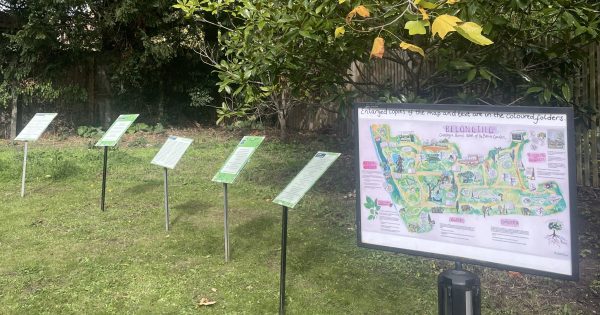
The map and poems are on display in a new Community outdoor exhibition space found in the picnic bench area next to the Schools’ Garden.
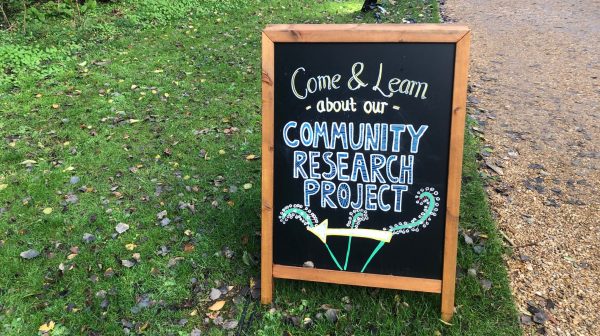
Tell us what you think
We would like to hear what our Garden visitors think of these improvement suggestions, how we could make the Garden more welcoming, and how visitors would like to get more involved in the Garden.
The Poems
During the sessions the co-researchers also wrote a series of poems inspired by the Garden. These are also on display in the project’s outdoor exhibition
The Poems
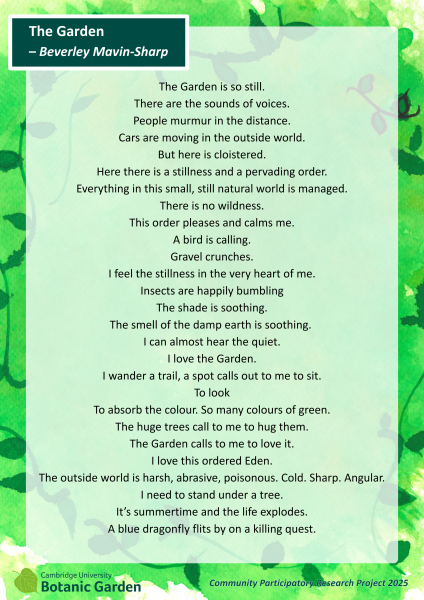
The Garden
by Beverley Mavin-Sharp
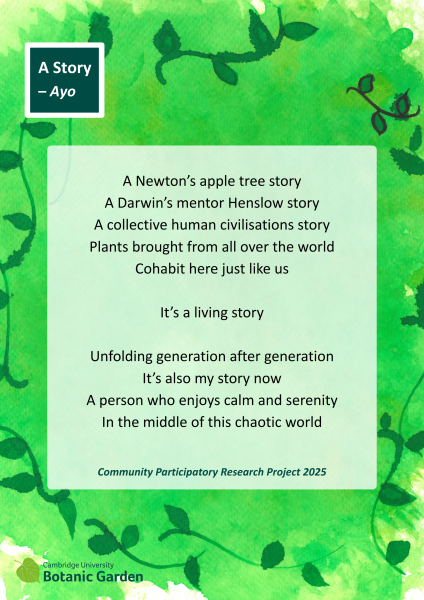
A Story
By Ayo
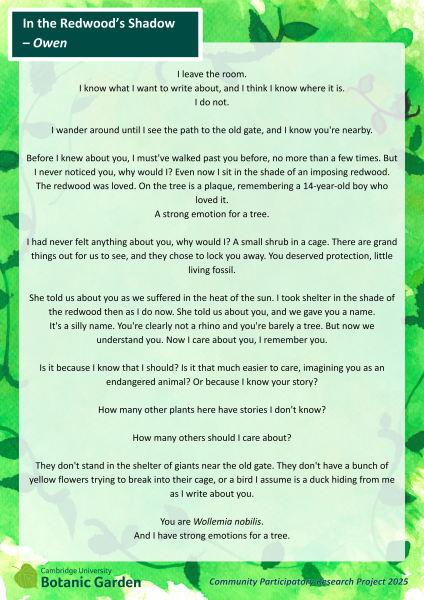
In the Redwood's Shadow
By Owen
Coming to the Garden for Perpsective
by Lynn Fraser
Some Die After Flowering
By Jane Monson
Come to the Garden
By Glynn Walsh