For the first time in modern Cambridge history, students, researchers and professionals will be able to undertake a dedicated, in-depth academic course in botany, a discipline many argue has gradually disappeared from university education, leaving graduates without the essential knowledge needed to apply research to real-world challenges.
Cambridge University Botanic Garden (CUBG) has launched a new Certificate in Botany. This intensive, month-long residential course is designed to restore foundational plant knowledge and reconnect researchers with the diversity of plants beyond the laboratory. Applications are now open for the inaugural summer course, running 6 July – 1 August 2026.
The programme is aimed at advanced undergraduates, PhD students, early-career researchers, professional ecologists, horticulturalists and conservation practitioners seeking deeper botanical expertise.
The UK does not offer a stand-alone botany undergraduate degree, with the subject largely absorbed into broader plant science courses. As genetics, molecular biology and plant biotechnology have rapidly advanced, many scientists now graduate without learning the fundamentals of identifying and classifying plants, with associated skills in comparative plant morphology. The result is a growing disconnect.
“Sadly, two of the biggest threats to plants and botany today are the continuing loss of habitat and the lack of botanical expertise (particularly in the professional sector) through diminishing higher education courses.”


Professor Sam Brockington, Curator of CUBG and Professor of Evolution at the University of Cambridge, says:
“When it comes to protecting nature, one of the really big challenges we face is that we are losing the basic skill of identifying plants. We have become exceptionally good at studying plant mechanisms at the molecular level but can struggle to translate that molecular knowledge back to the whole organism.
Botany has disappeared as a standalone undergraduate degree yet provides the language and building blocks of plant science – the ability to observe, describe and understand plant diversity. Without that foundation, it becomes much harder to translate discoveries into solutions for food security, climate resilience or ecosystem restoration. This course seeks to address this gap.”
Plant science is advancing at pace. While fields such as genomics, metabolomics and computational biology are transforming how we study plants, these advances still depend on something increasingly rare – a deep, first-hand knowledge of plant diversity, form and evolution. The ability to recognise, describe and compare plants remains fundamental to framing research questions, interpreting data and applying plant science meaningfully in the real world.
The month-long Certificate in Botany immersive course responds directly to that need. Based entirely at the Botanic Garden, the programme combines lectures, practical classes and close study of plants from the Garden’s living collections to reconnect modern plant science with its botanical foundations.
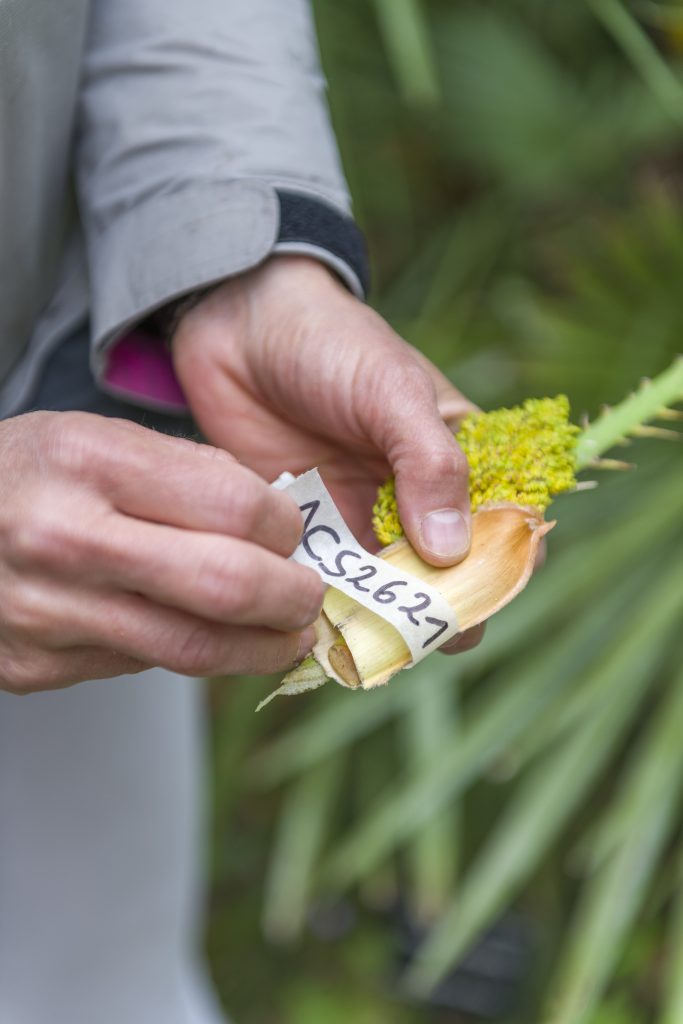
Acting Head of Learning, co-designer of the course and plant scientist Dr Raphaella Hull explains: “Understanding the normal wild form of a plant is essential when assessing changes observed in the lab. Without this broader perspective, researchers can struggle to interpret unusual growth patterns, altered structures or ecological interactions, and to apply their findings beyond a single model species.
“During my PhD at the University of Cambridge, I investigated how plants interact with beneficial soil fungi, with important implications for food security. This research depended on a strong grounding in plant form and the diversity of flowering plants. However, these foundational topics are increasingly missing from university curricula.”
Employers in fields ranging from agriculture to conservation report increasing difficulty recruiting graduates with strong plant identification and taxonomic skills. Ecologists and environmental organisations are increasingly concerned that the erosion of botanical education risks leaving the UK without the expertise required to address biodiversity loss, climate change and sustainable food production.
Learning from Darwin's mentor - what the certificate in Botany entails


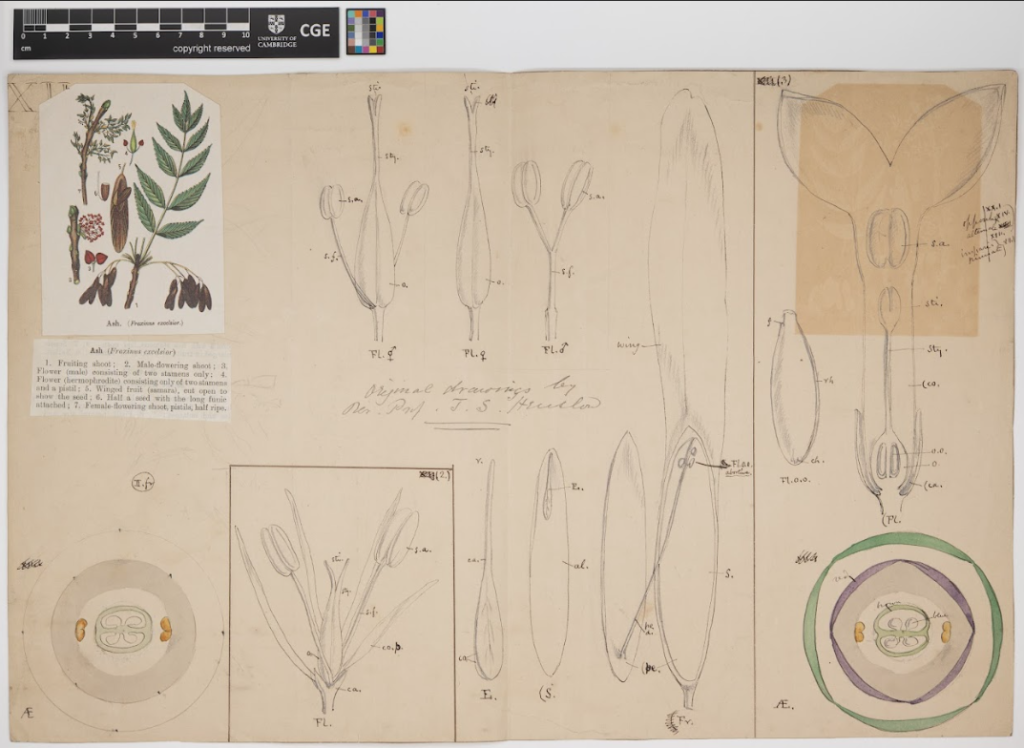
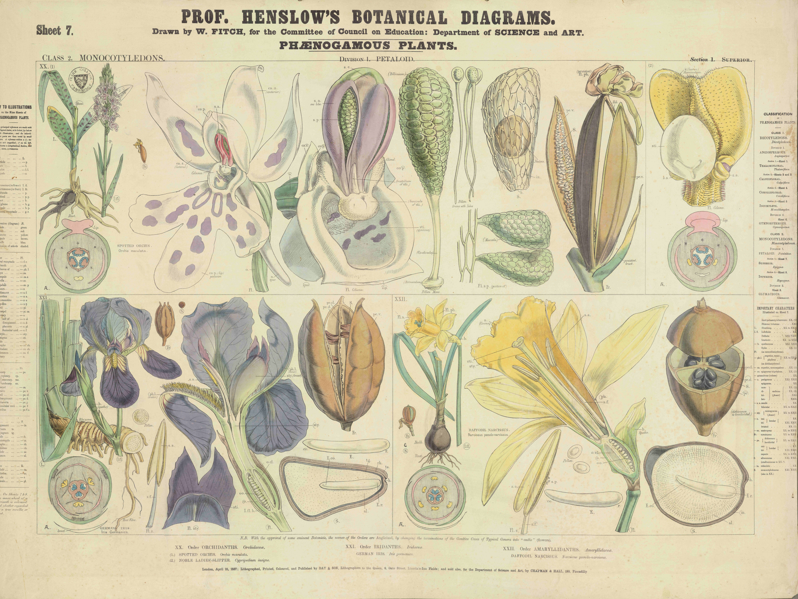

The Certificate in Botany draws inspiration from the teaching philosophy, curriculum and materials of Cambridge botanist John Stevens Henslow (1796–1861): founder of the current CUBG, Professor of Botany at the University of Cambridge (1825–1861) and mentor to Charles Darwin. Henslow championed learning through close observation of living plants – an approach that profoundly shaped Darwin’s development as a naturalist. When Darwin came to Cambridge as a student, he had the opportunity to formally study botany for the first time. He enjoyed Henslow’s course so much that he took it three years in a row.
“I was fortunate enough to be on terms of intimacy with Professor Henslow, and I owe more to him than to any other man.”
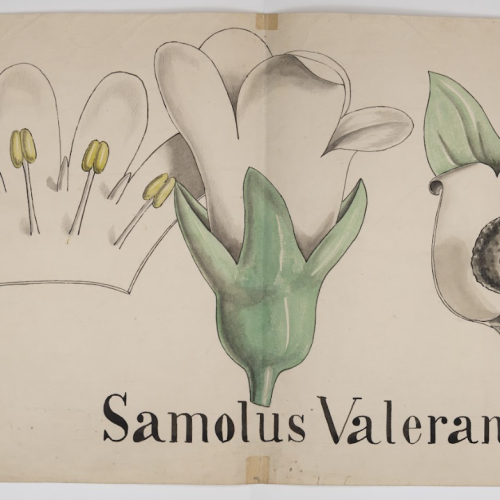
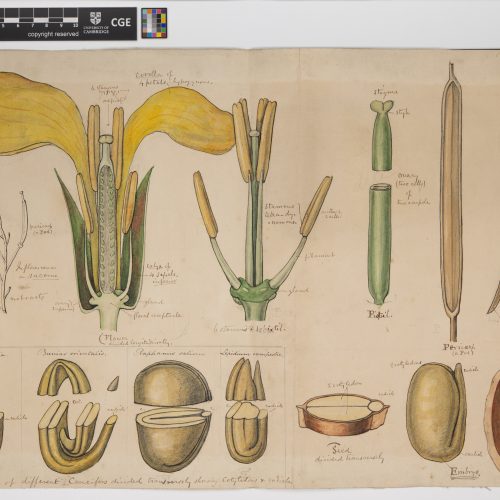
Henslow’s original teaching materials – some believed to have inspired Darwin – have recently been unearthed from the University Herbarium. These, together with detailed botanical wall charts, watercolour paintings and drawings will once again be used in teaching during the course, alongside contemporary scientific resources and teaching methods.
Sam Brockington says: “Henslow was a phenomenal teacher. He believed in the importance of observing and documenting variation first hand. That principle remains profoundly relevant today.
His materials were extraordinarily detailed and remain both scientifically accurate and relevant. We will be bringing them back into use, alongside direct study of plants from our world-class living collections, making the course a fusion of historic and modern teaching – pairing 19th-century rigour in observational botany with 21st-century plant science. It’s pretty unique.”


A living classroom - what students will learn
In its inaugural year, 15 participants will be selected to study on site at CUBG, working directly with its living and archival collections. Focus will be given to the Garden’s historic Systematic Beds, originally designed to demonstrate plant relationships and now restored to showcase our modern understanding of the evolution of plant diversity.
Students will learn the parts of a plant, how plants are grouped and named, how they are related through evolution and how to recognise and identify them confidently in the field. The course introduces the fundamentals of comparative morphology and plant systematics, then applies this knowledge to more than 70 key temperate and tropical flowering plant families.
If we want to train the next generation of scientists capable of solving real-world environmental challenges, we have to rebuild the foundations. This course is about training botanists again – scientists who can see, interpret and understand the full diversity of the plant kingdom.
Learning will integrate theory and practice, with daily lectures supported by hands-on examination of living material, botanical illustration, field excursions and practical workshops on herbarium voucher preparation, seed collection and botanical expeditions. Participants will also have access to historic botanical materials from across University of Cambridge collections, offering a uniquely rich experience of botany at Cambridge.
By restoring this foundational knowledge, the course aims to equip participants with the tools needed to translate laboratory discoveries into practical solutions, from improving crop resilience and understanding plant-microbe relationships to identifying species with potential medicinal or environmental value.
Sam Brockington says: “I attended a month-long botany residency over 25 years ago, and it remains one of the most formative experiences of my career. Studying intensively in a botanic garden setting deepened my understanding of plant diversity, strengthened my commitment to botany and expanded my professional network. It was a pivotal moment that shaped my scientific perspective and career path.
If we want to train the next generation of scientists capable of solving real-world environmental challenges, we have to rebuild the foundations. This course is about training botanists again – scientists who can see, interpret and understand the full diversity of the plant kingdom. I’m delighted that we can now offer a similar course at Cambridge University Botanic Garden.”
Course information
Certificate in Botany
Cambridge University Botanic Garden
6 July – 1 August 2026
Applications close: midday 7 April 2026
15 places available
Supported by funding from The Finnis Scott Foundation.
Henslow’s legacy also lives on through the botanic garden that he persuaded the University of Cambridge to move to a larger site in order to support the collecting and studying of plants and trees. You can read more about Henslow himself as well as the history of the Garden and Henslow’s vision for it in the About the Garden section of the site.
The Garden also continues to mark our relationship with Henslow through our Henslow Circle patrons’ programme. Henslow Circle members are some of the Garden’s biggest supporters and through their patronage, they help us to continue our work supporting plant science research, maintaining our heritage landscapes and opening up the amazing world of plants to as many people as possible. Please visit the Henslow Circle Patrons Group page to find out more.