Back to the page
  • Welcome
  • Visit us
    • Visit us
    • Opening times & information
    • Visiting – travel, dogs, toilets, etc.
    • Ticket Prices
    • Pre-book tickets
    • Garden map
    • Group Visits
    • Tours
    • Press and photography
    • The Garden Café
    • The Garden Shop
  • Accessibility
  • What’s on
  • The Garden
    • The Garden
    • About the Garden
    • Horticultural Collections
    • Understanding Plant Labels
    • History of the Garden
    • Wildlife
    • Plant picks of the week
  • Learning
    • Learning
    • Schools
    • Colleges and Universities
    • Short Courses
    • Family Activities
    • Communities
    • Science on Sundays
    • Trails for Adults
    • Certificate in Botanical Horticulture
  • Science
    • Science
    • Our Science Staff
    • Our Staff Publications
    • Your Science
    • Supporting Your Research
    • Phenology Project
  • Collections
    • Collections
    • Living Collections
    • Seed Bank
    • Herbarium
    • Cory Library
    • Archives
    • Living Collections Portal
    • Botanic Dyes
  • News
  • Support Us
  • Friends
    • Friends
    • Join the Friends
    • Friends’ Events
    • Corporate Support and Corporate Friends
    • Gift Memberships
  • Cambridge Botanic Lights 2025
    • Cambridge Botanic Lights 2025
    • Cambridge Botanic Lights – Frequently Asked Questions (FAQs) 2025
    • Cambridge Botanic Lights – Accessibility
    • Cambridge Botanic Lights – Photography Competition
Donate
Cambridge University Botanic Garden
menu

Today's Opening Times:
10:00am - 3:30pm

  • News
  • Support Us
  • Contact Us
  • Donate
  • Home
  • Visit us
    • Ticket Prices
    • Opening times & Information
    • Visiting – travel, dogs, toilets, etc.
    • Garden Map
    • Group Visits
    • Tours
    • Pre-book tickets
    • Press & Photography
    • The Garden Shop
    • The Garden Café
    • Accessibility
    • Virtual Visits
  • What’s on
  • The Garden
    • About the Garden
    • Horticultural Collections
    • Understanding Plant Labels
    • History of the Garden
    • Wildlife
    • Plant picks of the week
  • Learning
    • Schools
    • Colleges and Universities
    • Short Courses
    • Family Activities
    • Communities
    • Science on Sundays
    • Trails for Adults
    • Certificate in Botanical Horticulture
  • Science
    • Our Science Staff
    • Our Staff Publications
    • Your Science
    • Supported Publications
    • Supporting Your Research
    • Phenology Project
  • Collections
    • Living Collections
    • Herbarium
    • Seed Bank
    • Cory Library
    • Archives
    • Collecting Expeditions
    • National Plant Collections ®
    • Living Collections Portal
    • Botanic Dyes
  • Friends
    • Join the Friends
    • Gift Memberships
    • Friends’ Events
    • Corporate Support and Corporate Friends
  • Cambridge Botanic Lights 2025
    • Cambridge Botanic Lights – Frequently Asked Questions (FAQs) 2025
    • Cambridge Botanic Lights – Accessibility
    • Cambridge Botanic Lights – Photography Competition
  • Open search panel
Close search panel
Fans of glossy, green foliage with cream tips.
Home Plants Calocedrus decurrens
Share Created with Sketch.
  • Email Share this with Email
  • Facebook Share this with Facebook
  • Twitter Share this with Twitter
  • Pinterest Share this with Pinterest
  • WhatsApp Share this with WhatsApp
  • Google + Share this with Google plus

Calocedrus decurrens

View plant on map View all plants

These columnar incense cedars stand sentinel beside the Fountain.

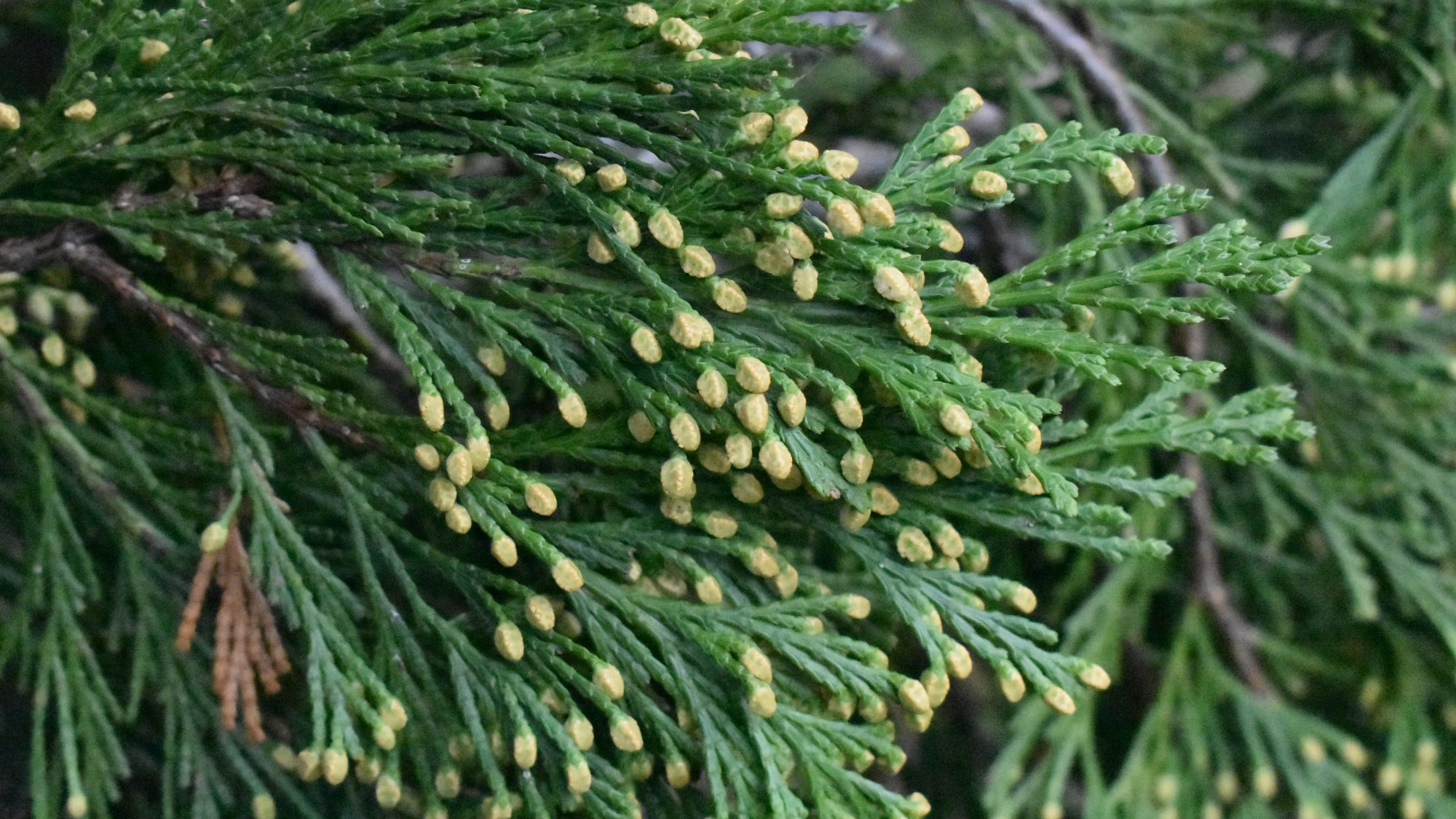
The genus Calocedrus was known as Libocedrus until 1993 when it was re-assigned to its own genus of three species, but when first introduced into cultivation in the 1850’s it was referred to as Thuja gigantea. Calocedrus decurrens is a coniferous tree belonging to the cypress family (Cupressaceae). It takes its common name incense cedar from the aroma omitted when the leaf scales and twigs are crushed. A columnar tree exceeding 40m in height, C. decurrens is a native of the western United States where it can grow at altitudes in excess of 2,000m above sea level. During autumn it produces small male strobili (pollen producing cones) at the tips of the flat sprays of foliage. These are followed by long, female seed cones which are a pale green when immature, and which ripen to a rich brown, and open to reflex their scales. C. decurrens was once widely grown for its timber, which was used in the production of pencils, though due to the depletion of mature stands of this tree, its use is now limited to the production of chests.

University of Cambridge Museums and Botanic Garden

Social

  • Follow us on YouTube
  • Follow us on Twitter
  • Follow us on Instagram
  • Follow us on Facebook
  • Follow us on Threads
  • Follow us on LinkedIn

© 2025 Cambridge University Botanic Garden

  • Privacy policy
  • Contact us