
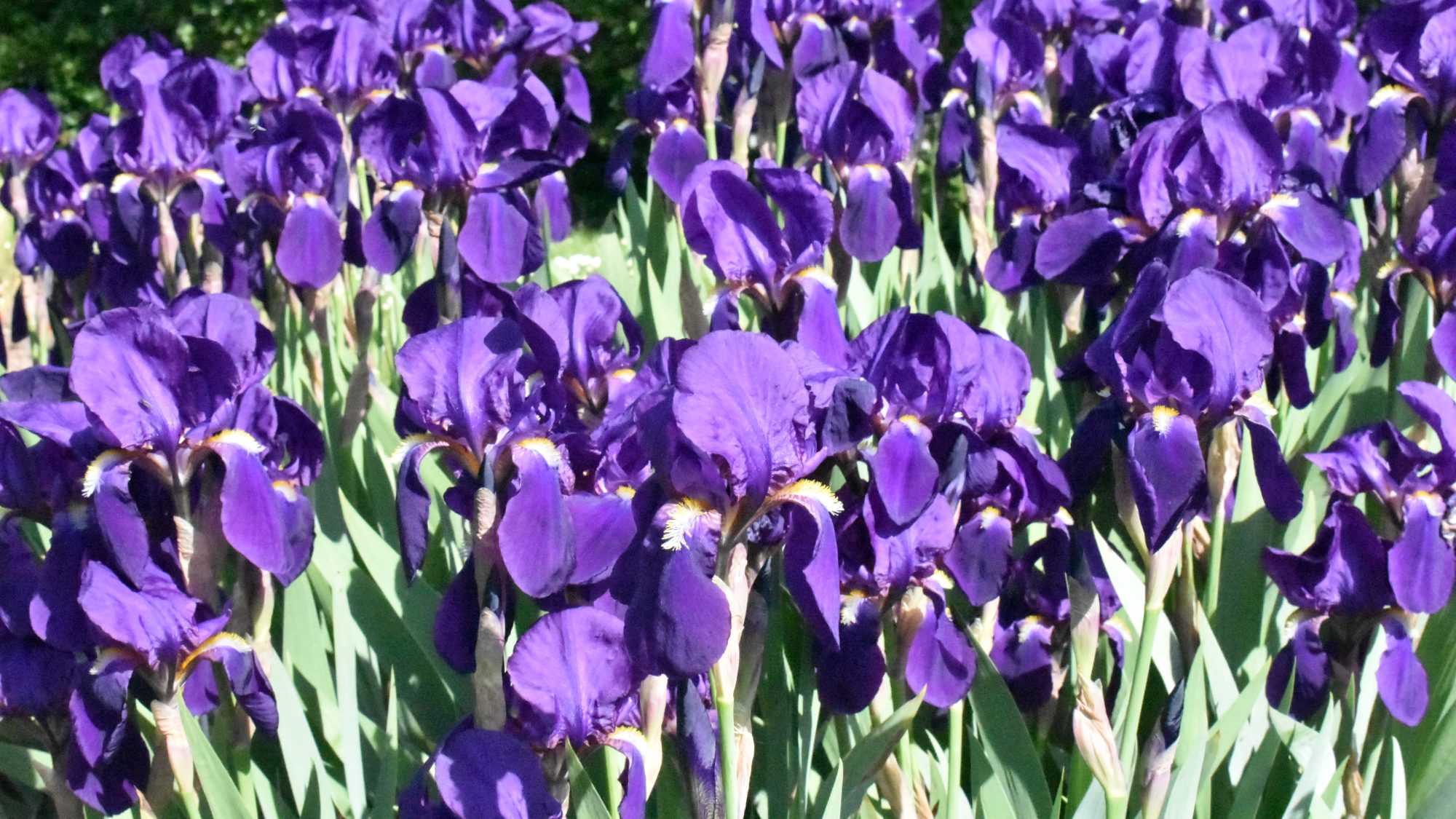
This bearded iris is producing attractive flowers on the Systematic Beds.
Comprising over 300 species the genus Iris occurs throughout the northern hemisphere, where it grows in wetlands, meadows, rocky, open sites and mountainous regions. Members of the genus may be either bulbous, rhizomatous or fleshy-rooted. All have slender leaves with parallel veins, and have three lower, reflexed petals (falls); three smaller, inner petals which may be erect or horizontal; three stamens; and a trifurcated style. The rhizomatous bearded irises are perhaps the most familiar, and bear fans of sword-shaped leaves, and the flowers have a distinct beard running down the centre of the falls. It is estimated that there are as many as 100,000 cultivars of bearded iris, and they come in a range of colours, from pure white, to yellow, deep magenta and rust. All enjoy a sunny position in well-drained soil. The origin of Iris x kochii is unclear, though records indicate it was raised before 1900, and was widely admired for its ‘profusion of bloom’ and ‘handsome, rich claret purple blooms’ in the early 1900’s.