Scientists led by CUBG’s Director, Professor Beverley Glover, have found a genetic ‘time machine’ inside modern plants – a molecular toolkit so old that it predates flowers, trees and even roots. The new research shows that a three-part genetic switch, called the MBW complex, used by plants today is incredibly ancient – it first evolved in the earliest land plants nearly 500 million years ago. The study shows how this system was repurposed over millennia, allowing plants to adapt to life on land.
This same genetic engine still powers much of the diversity we see in gardens today – from petal colour to the root hairs in today’s flowering plants and tiny protective leaf hairs.
CUBG’s Director, Professor Beverley Glover, also Head of the Evolution and Development group at Cambridge University’s Department of Plant Sciences, says: “What excites me most about this work is that it feels like looking through a special telescope that shows us what was happening when plants first made the transition onto land about 470 million years ago – we have the opportunity to understand what tools those early plants had to specify different cell types, and how those tools then diversified over time.”
“What excites me most about this work is that it feels like looking through a special telescope that shows us what was happening when plants first made the transition onto land about 470 million years ago.”
An Ancient Toolkit
The MBW complex is a set of three proteins that act like a control switch in plants, guiding how plant cells develop and creating different cell types in flowering plants – shaping much of the diversity we see in flowering plants (angiosperms). From colour pigments in petals to protective leaf hairs and the precise spacing of root hairs, almost every specialised cell type on a plant’s surface is managed by this complex.
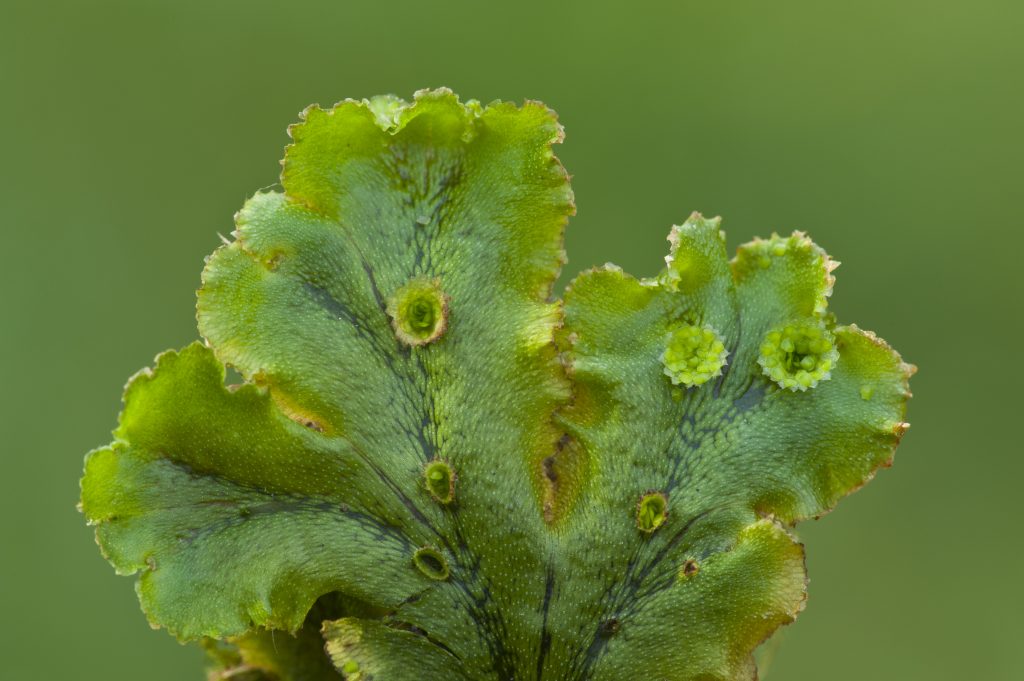
Until now, scientists didn’t know whether this system was a recent evolutionary invention or something far older. The answer came from liverworts – small, simple plants that don’t have flowers, true roots or produce seeds, and spread using spores. They absorb water directly through their surface, growing in damp, shady places. Liverworts are part of the bryophyte lineage – an early branch of the plant family tree that split off long before flowering plants evolved. Finding the MBW complex here suggests that this regulatory machinery is ancestral to all land plants and remains a foundational toolkit across the plant kingdom.
Researchers isolated the MBW genes from the liverwort Marchantia polymorpha and discovered that its proteins assemble into the same three‑part framework used by flowering plants today. This means the MBW complex is not a modern innovation – it is an ancestral toolkit shared by all land plants.
“Our findings help solve an evolutionary puzzle – while nearly all plants make red pigments, they do so through many different chemical pathways. By understanding how pigmentation may have functioned in their common ancestor, we can begin to piece together why so many different pathways have evolved.”
Dr Thea Kongsted, lead author of the paper, who completed her PhD in Beverley Glover’s lab and is now a Postdoctoral Fellow at the Gregor Mendel Institute of Molecular Plant Biology in Vienna, says: “Our findings help solve an evolutionary puzzle – while nearly all plants make red pigments, they do so through many different chemical pathways. By understanding how pigmentation may have functioned in their common ancestor, we can begin to piece together why so many different pathways have evolved.
We found that even though the pigments themselves differ, their production is triggered by the same genetic mechanism across different species. Beyond this, we were surprised to find that these pigment regulators had been repurposed for new pathways in liverworts in a remarkably similar way to how they were repurposed in flowering plants.”
From ancient sunscreen to modern petals
In liverworts, the MBW complex controls two key features:
- auronidins – red pigments that act like sunscreen, protecting early plants from harsh UV radiation and from infection.
- oil bodies – tiny sacs filled with bitter chemicals that deter animals from eating plants.
These functions were essential for survival on land. Yet in flowering plants, the same genetic machinery has been repurposed to create:
- the vibrant colours of petals that attract pollinators
- the protective hairs on leaves
- the precise spacing of root hairs that absorb nutrients
The study shows how efficient plants are – rather than inventing entirely new systems, they have often duplicated and tweaked specific parts of an ancient, proven machine to meet new environmental challenges.
The findings suggest that much of the diversity of traits we see in the plants around us today is the result of evolution repeatedly ‘copying and pasting’ this ancient toolkit. This reveals a replicated blueprint for survival and that plants have successfully innovated across hundreds of millions of years.
A living link in the Botanic Garden
Here in the Botanic Garden you can see the legacy of this ancient toolkit everywhere:
- the deep red pigments in liverworts growing in the Glasshouses
- the range of colours of orchids, poppies and dahlias
- the fine protective hairs of many plants
- the nutrient‑absorbing root hairs on almost every plant beneath the soil
All of these traits across a diverse range of different species have been shaped by the same 470‑million‑year‑old molecular mechanism.


Why this matters for the future
While this research contributes to solving an evolutionary puzzle, it also provides a roadmap for modern industry and agriculture. Understanding how plant cell types have been modified by evolution may help scientists design strategies to modify cell fate in crops and optimise the production of pigments, drugs and food industry products.
By learning to toggle the specialist ‘M’ genes, scientists can move away from unpredictable genetic changes and toward surgical‑level modifications of plant traits and be able to:
- boost natural pigments for food and pharmaceutical industries
- enhance pest‑resistant leaf hairs
- optimise root hairs to help crops absorb nutrients in poor soils
- design plants that can better withstand climate stress
A blueprint for the next generation of plants
This study reveals that much of the diversity in the plant kingdom – from ancient liverworts to the flowers in our gardens – stems from a single, durable genetic blueprint. Evolution has been remixing this toolkit for nearly half a billion years, and now scientists are learning how to read and repurpose it.
This article was adapted from a feature by the Department of Plant Sciences. Read the full scientific version here.
This research was published in the journalCurrent Biology May 2026: Kongsted, T. E., et al. ‘Replicated repurposing of an ancestral transcriptional complex in land plants.’ Current Biology, May 2026. DOI: 10.1016/j.cub.2026.04.031
Funding: The work was supported by the UKRI Natural Environment Research Council and the Biotechnology and Biological Sciences Research Council.
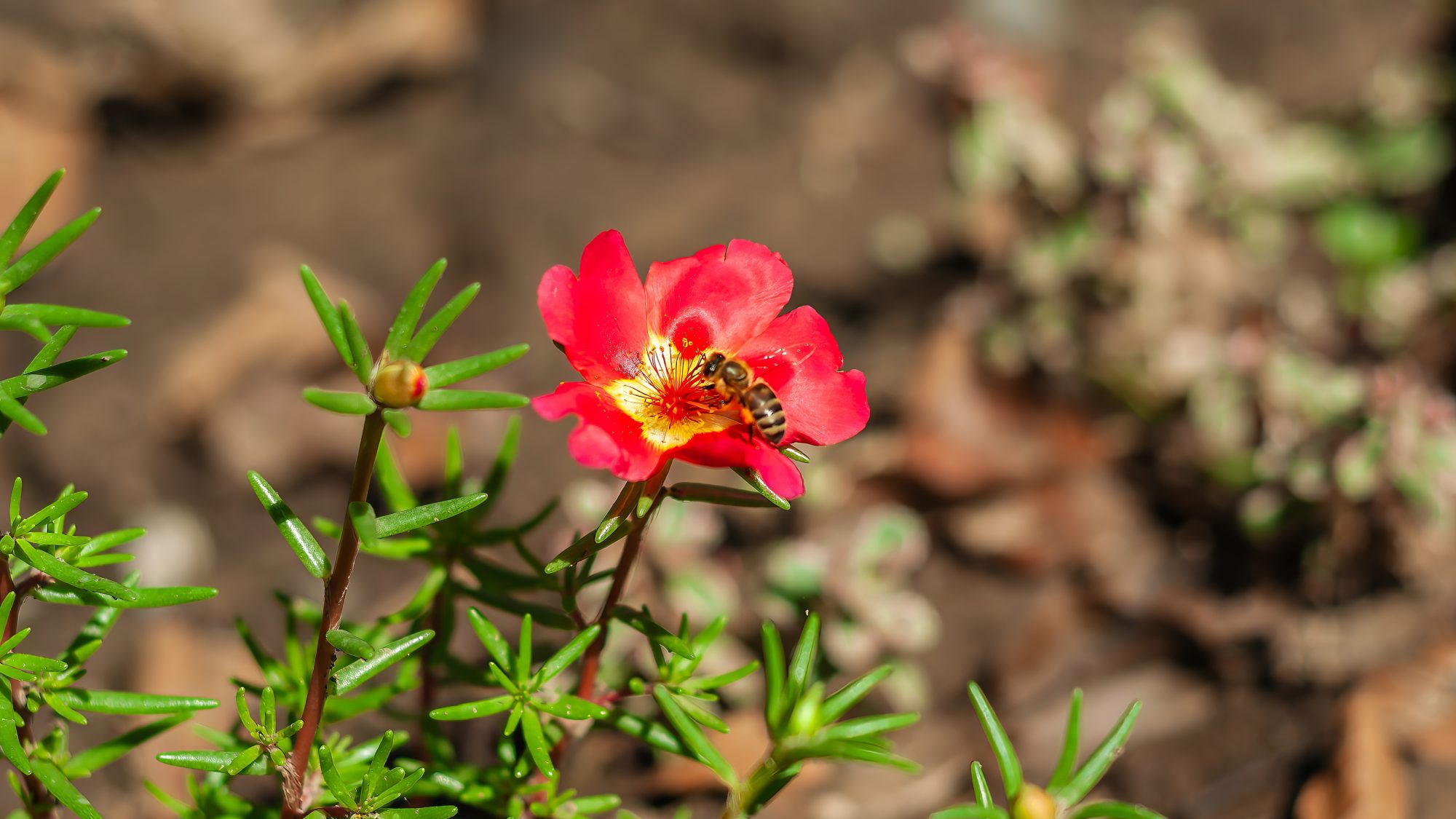
Main image: A bee gathers pollen from a red flower. Credit: Audrey Abryutin (Getty Images).
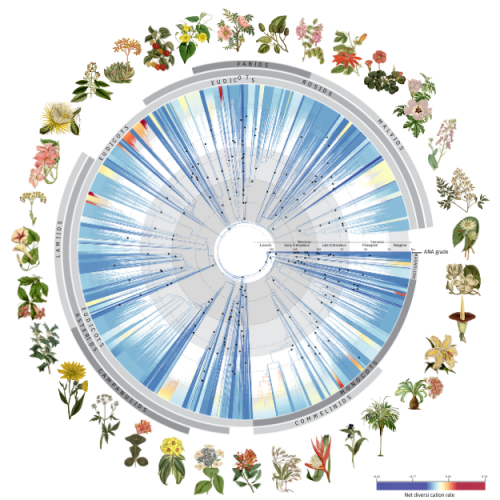
To explore how this ancient genetic toolkit connects to the wider story of plant evolution, you can visit parts of the Botanic Garden that showcase early plant lineages – and read more about how scientists are reshaping our understanding of the Tree of Life: