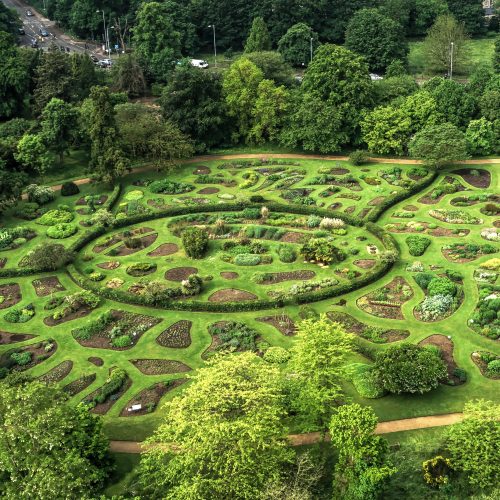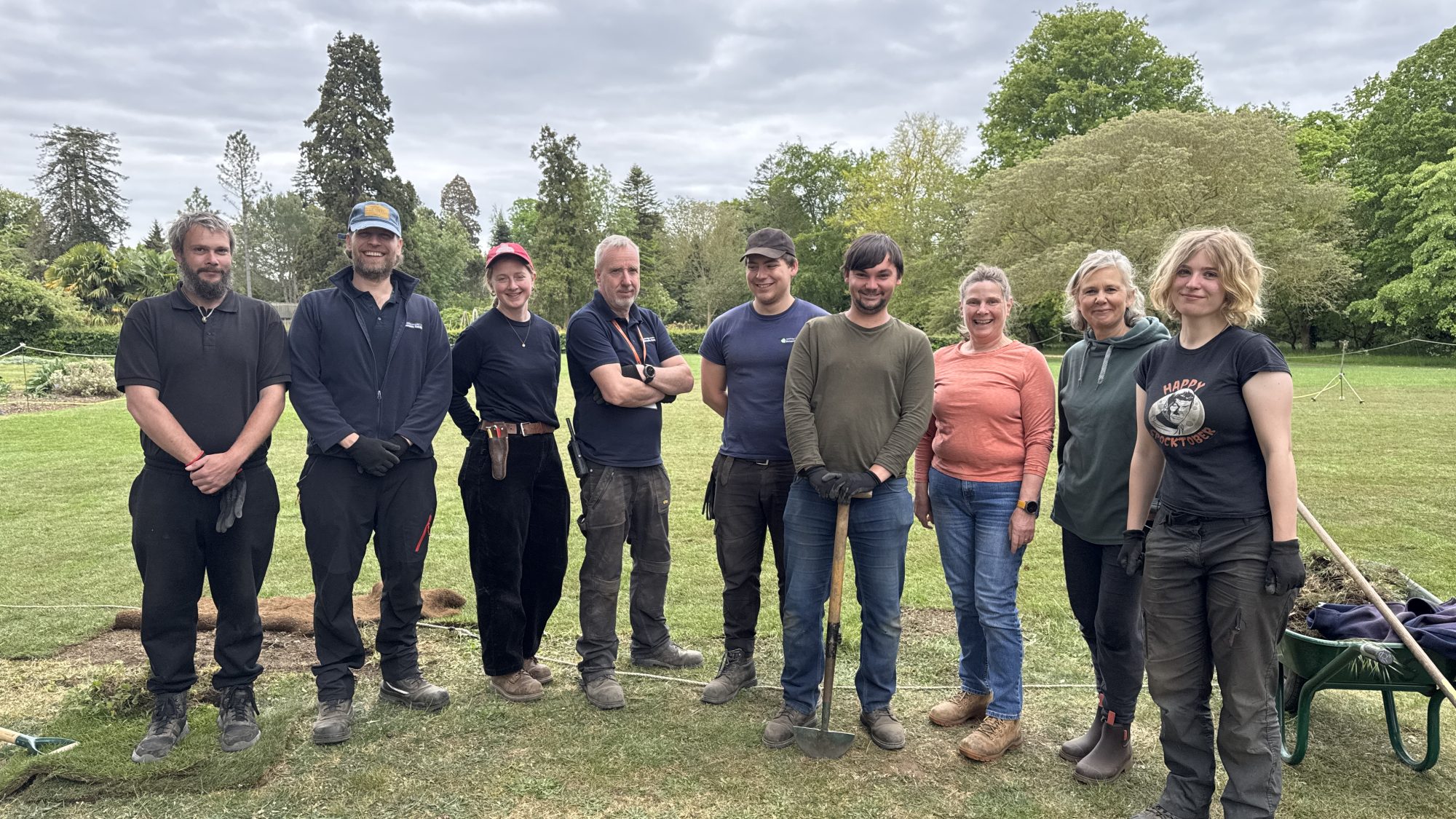
Staff from across the Garden recently came together to help lay 800sqm of turf – around the size of three tennis courts – in the northern section of the historic Systematic Beds. Located closest to Trumpington Road, this area marks the latest stage in the ongoing redevelopment of the collection.
Around 50 members of staff from teams across the Garden joined the effort over two days, with colleagues from horticulture, learning, visitor services, administration, communications and more lending a hand – many enjoying the opportunity to swap computer screens and meetings for fresh air, teamwork and turf.
The work forms part of the ‘Understanding Plant Diversity’ project, which is updating the Systematic Beds to reflect the latest scientific understanding of how plants are related, based on modern genetic research and the APG IV (Angiosperm Phylogeny Group IV) classification system.


Horticultural Team Leader, Paul Aston explains: “The Systematic Beds were first laid out in the 1850s and offer a picture of how plant families are related. With modern genetic approaches we have a much more accurate picture of these relationships. This has changed several boundaries between families and in some cases, families have disappeared altogether. Updating the beds means bringing them in line with modern science for teaching and research purposes while still respecting their historic design by keeping their position within the initial layout’s structure.”
The northern section, known as the Calyciflorae beds, has been divided into two phases. Existing plant material from the current phase has either been carefully relocated behind the scenes to support the Garden’s wider collections strategy or deaccessioned where it was no longer needed in the permanent collection.
Work began over the winter months, when existing material was cleared before the ground was prepared for re-turfing. The turf will remain in place until autumn when the new beds will be cut out, ready for planting over the autumn and next winter.


The redevelopment of the Systematic Beds has taken place in stages since 2016, gradually updating the collections while also reinstating key elements of the 1846 design. Alongside reflecting modern taxonomic understanding, the project aims to increase the diversity of species grown and source more material of known wild origin, strengthening the value of the collection for research, teaching and conservation.
While work on the northern section continues, the recent turf-laying days offered a chance for staff from across the Garden to contribute to one of its most significant long-term projects together.
Head of Horticulture, Sally Pettit, says: “It was fantastic to see so many teams coming together to help. The Systematic Beds are such an important part of the Garden’s history and future, so having colleagues from across the organisation involved makes it really special.”
The entire project is expected to be completed by 2028.