Back to the page
  • Welcome
  • Visit us
    • Visit us
    • Opening times & information
    • Book Tickets
    • Visiting – travel, dogs, toilets, etc.
    • Garden map
    • Group Visits
    • Tours
    • Press and photography
    • The Garden Café
    • Garden Shops
  • Accessibility
  • What’s on
  • The Garden
    • The Garden
    • About the Garden
    • Horticultural Collections
    • Understanding Plant Labels
    • History of the Garden
    • Wildlife
    • Plant picks of the week
  • Learning
    • Learning
    • Short Courses
    • Certificate in Horticulture
    • Certificate in Botany
    • Schools
    • Colleges and Universities
    • Family Activities
    • Communities
    • Science on Sundays
    • Trails for Adults
  • Science
    • Science
    • Our Science Staff
    • Our Staff Publications
    • Your Science
    • Supporting Your Research
    • Phenology Project
  • Collections
    • Collections
    • Living Collections
    • Seed Bank
    • Herbarium
    • Cory Library
    • Archives
    • Living Collections Portal
    • Botanic Dyes
  • News
  • Support Us
  • Friends
    • Friends
    • Join the Friends
    • Friends’ Events
    • Corporate Support and Corporate Friends
    • Gift Membership Vouchers
  • Cambridge Botanic Lights 2026
    • Cambridge Botanic Lights 2026
    • Cambridge Botanic Lights – Frequently Asked Questions (FAQs)
    • Cambridge Botanic Lights – Accessibility
Donate
Cambridge University Botanic Garden
menu

Today's Opening Times:
10:00am - 6:00pm

  • News
  • Support Us
  • Contact Us
  • Donate
  • Home
  • Visit us
    • Opening times & Information
    • Book Tickets
    • Visiting – travel, dogs, toilets, etc.
    • Garden Map
    • Group Visits
    • Tours
    • Press & Photography
    • Garden Shops
    • The Garden Café
    • Accessibility
    • Virtual Visits
  • What’s on
  • The Garden
    • About the Garden
    • Horticultural Collections
    • Understanding Plant Labels
    • History of the Garden
    • Wildlife
    • Plant picks of the week
  • Learning
    • Short Courses
    • Certificate in Horticulture
    • Certificate in Botany
    • Schools
    • Colleges and Universities
    • Family Activities
    • Communities
    • Science on Sundays
    • Trails for Adults
  • Science
    • Our Science Staff
    • Our Staff Publications
    • Your Science
    • Supported Publications
    • Supporting Your Research
    • Phenology Project
  • Collections
    • Living Collections
    • Herbarium
    • Seed Bank
    • Cory Library
    • Archives
    • Collecting Expeditions
    • National Plant Collections ®
    • Living Collections Portal
    • Botanic Dyes
  • Friends
    • Join the Friends
    • Gift Membership Vouchers
    • Friends’ Events
    • Corporate Support and Corporate Friends
  • Cambridge Botanic Lights 2026
    • Cambridge Botanic Lights – Frequently Asked Questions (FAQs)
    • Cambridge Botanic Lights – Accessibility
  • Open search panel
Close search panel
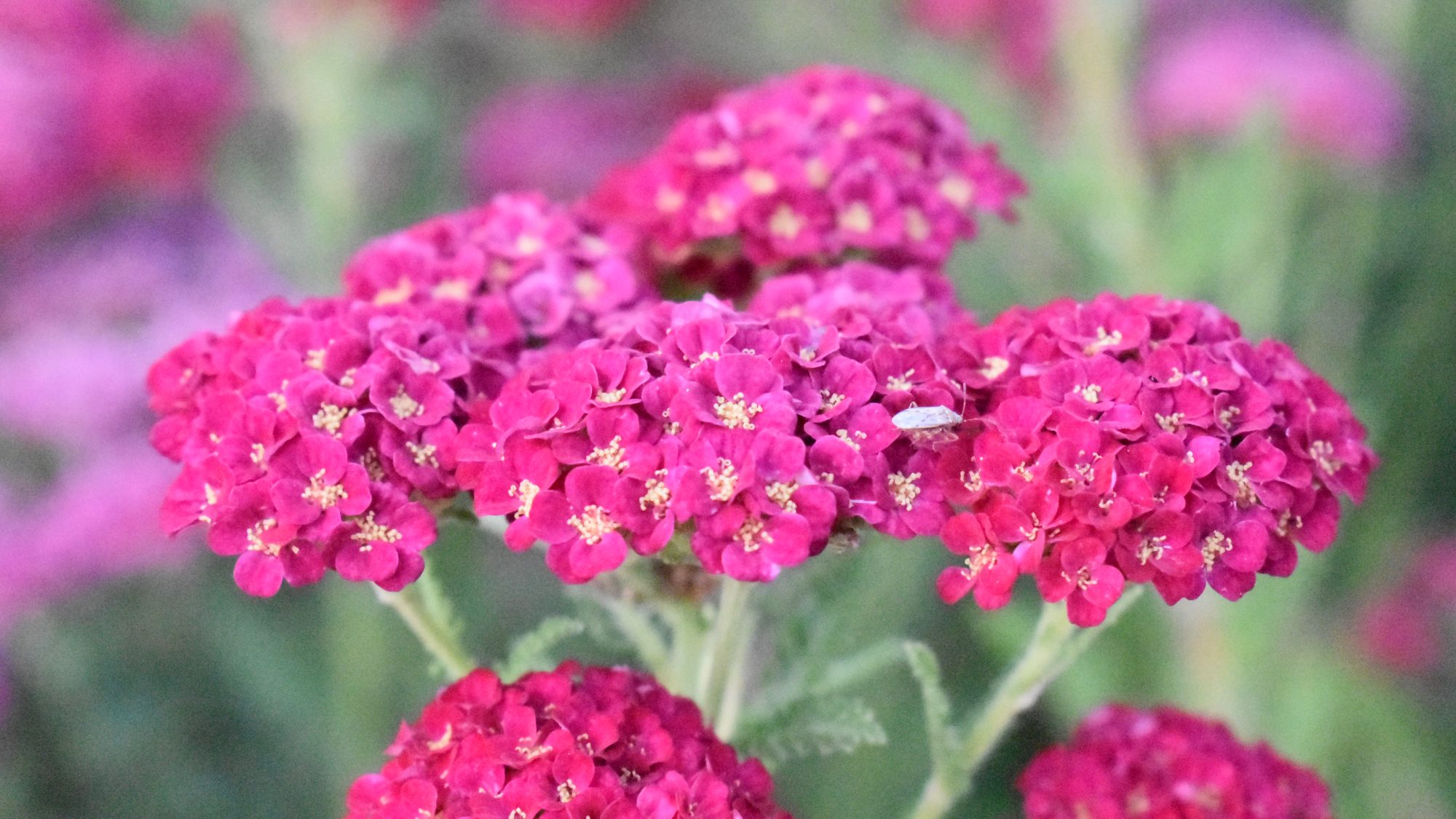
Flat heads of small, magenta flowers.
Home Plants Achillea millefolium ‘Pomegranate’
Share Created with Sketch.
  • Email Share this with Email
  • Facebook Share this with Facebook
  • Twitter Share this with Twitter
  • Pinterest Share this with Pinterest
  • WhatsApp Share this with WhatsApp
  • Google + Share this with Google plus

Achillea millefolium ‘Pomegranate’

View plant on map View all plants

This colourful yarrow adorns the Herbaceous Beds with flat flower heads.

‘Pomegranate’ is one of many selections or hybrids of A. millefolium (yarrow), a spreading, native perennial occurring throughout Europe and Asia which grows to up to 1m in height, and bears delicate foliage and flat-heads of white, cream of pink flowers. Reaching 50cm in height ‘Pomegranate’ is a naturally occurring cultivar of the ‘Summer Pastels’ range of Achillea discovered in 2003. It has erect stems with feathery foliage, and the richly-coloured flat corymbs each hold many individual flowers. The blooms appear from late spring through summer and the plant favours dry conditions and a sunny site. The genus takes its name from Achilles, the Trojan hero of Greek mythology who used yarrow to stop bleeding and to heal the wounds of his soldiers. The specific name millefolium means ‘thousand-leaved’ in reference to the delicate foliage.

University of Cambridge Museums and Botanic Garden

Social

  • Follow us on YouTube
  • Follow us on Twitter
  • Follow us on Instagram
  • Follow us on Facebook
  • Follow us on Threads
  • Follow us on LinkedIn

© 2026 Cambridge University Botanic Garden

  • Privacy policy
  • Contact us