Back to the page
  • Welcome
  • Visit us
    • Visit us
    • Opening times & information
    • Book Tickets
    • Visiting – travel, dogs, toilets, etc.
    • Garden map
    • Group Visits
    • Tours
    • Press and photography
    • The Garden Café
    • Garden Shops
  • Accessibility
  • What’s on
  • The Garden
    • The Garden
    • About the Garden
    • Horticultural Collections
    • Understanding Plant Labels
    • History of the Garden
    • Wildlife
    • Plant picks of the week
  • Learning
    • Learning
    • Short Courses
    • Certificate in Horticulture
    • Certificate in Botany
    • Schools
    • Colleges and Universities
    • Family Activities
    • Communities
    • Science on Sundays
    • Trails for Adults
  • Science
    • Science
    • Our Science Staff
    • Our Staff Publications
    • Your Science
    • Supporting Your Research
    • Phenology Project
  • Collections
    • Collections
    • Living Collections
    • Seed Bank
    • Herbarium
    • Cory Library
    • Archives
    • Living Collections Portal
    • Botanic Dyes
  • News
  • Support Us
  • Friends
    • Friends
    • Join the Friends
    • Friends’ Events
    • Corporate Support and Corporate Friends
    • Gift Membership Vouchers
Donate

Parts of the Glasshouse Range will be closed from 20 April for a few weeks while essential repairs are carried out to the internal walkway. During this time, half of the Glasshouse Range will be inaccessible to visitors. We apologise for any inconvenience.

Cambridge University Botanic Garden
menu

Today's Opening Times:
10:00am - 6:00pm

  • News
  • Support Us
  • Contact Us
  • Donate
  • Home
  • Visit us
    • Opening times & Information
    • Book Tickets
    • Visiting – travel, dogs, toilets, etc.
    • Garden Map
    • Group Visits
    • Tours
    • Press & Photography
    • Garden Shops
    • The Garden Café
    • Accessibility
    • Virtual Visits
  • What’s on
  • The Garden
    • About the Garden
    • Horticultural Collections
    • Understanding Plant Labels
    • History of the Garden
    • Wildlife
    • Plant picks of the week
  • Learning
    • Short Courses
    • Certificate in Horticulture
    • Certificate in Botany
    • Schools
    • Colleges and Universities
    • Family Activities
    • Communities
    • Science on Sundays
    • Trails for Adults
  • Science
    • Our Science Staff
    • Our Staff Publications
    • Your Science
    • Supported Publications
    • Supporting Your Research
    • Phenology Project
  • Collections
    • Living Collections
    • Herbarium
    • Seed Bank
    • Cory Library
    • Archives
    • Collecting Expeditions
    • National Plant Collections ®
    • Living Collections Portal
    • Botanic Dyes
  • Friends
    • Join the Friends
    • Gift Membership Vouchers
    • Friends’ Events
    • Corporate Support and Corporate Friends
  • Open search panel
Close search panel
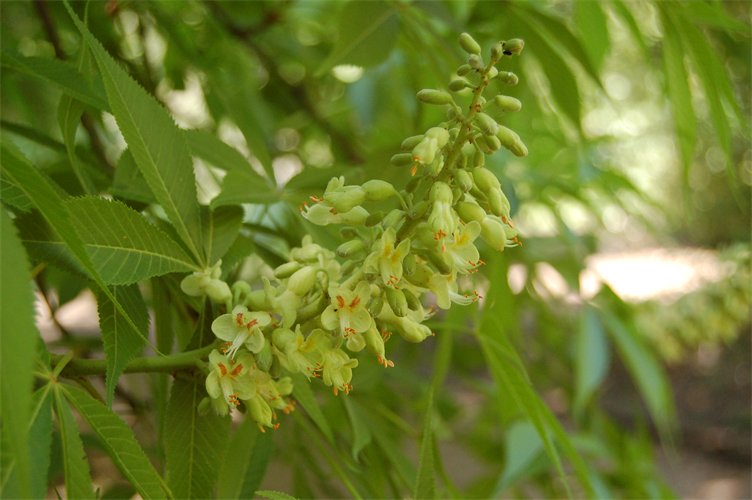
Spike of green-yellow flowers.
Home Plants Aesculus glabra var. arguta
Share Created with Sketch.
  • Email Share this with Email
  • Facebook Share this with Facebook
  • Twitter Share this with Twitter
  • Pinterest Share this with Pinterest
  • WhatsApp Share this with WhatsApp
  • Google + Share this with Google plus

Aesculus glabra var. arguta

View plant on map View all plants

The Ohio buckeye produces green-yellow candles of flower in the western boundary.

An American native, Aesculus glabra var. arguta has panicles of green-cream, four-petalled flowers, and stamens which protrude beyond the petals. It produces one to three brown seeds held in fleshy, prickly or warty seed cases. The palmate leaves bear seven or nine smooth, slender leaflets which have a tapered point. A native of the south east and central United States, it occurs on limestone slopes and sandy, open woodlands, and is tolerant of drier conditions. It usually grows to 10m in height, but can reach double this. It is one of an estimated 15 species of Aesculus, which have a natural distribution of North America, eastern Asia and Europe. Members of the genus have large, sticky buds; deciduous, opposite, palmate leaves; terminal panicles of flower; and smooth, warty or spiky seed capsules. Many are grown in gardens for their ornamental value.

University of Cambridge Museums and Botanic Garden

Social

  • Follow us on YouTube
  • Follow us on Twitter
  • Follow us on Instagram
  • Follow us on Facebook
  • Follow us on Threads
  • Follow us on LinkedIn

© 2026 Cambridge University Botanic Garden

  • Privacy policy
  • Contact us