Location: Classroom
About the course
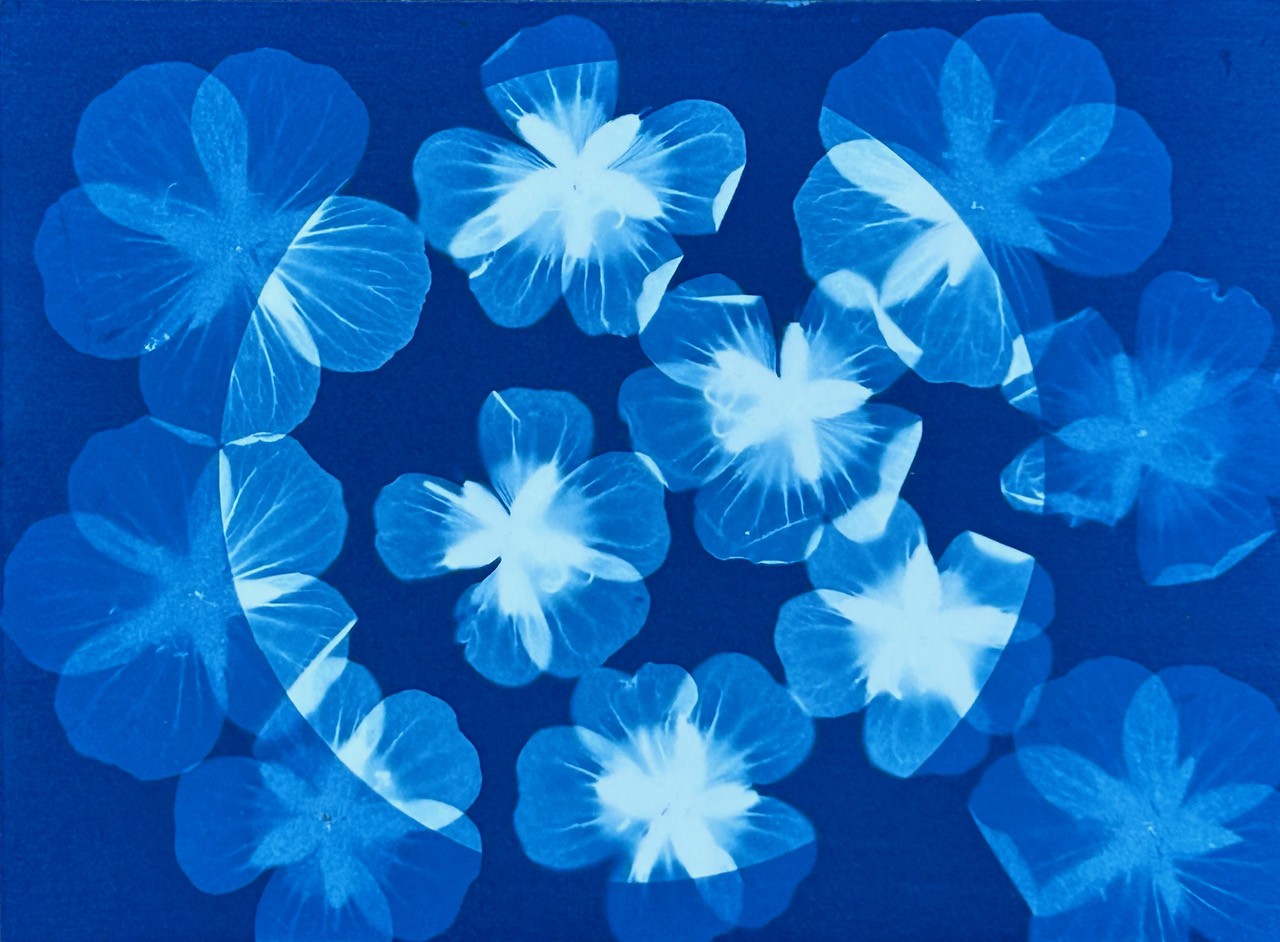
This practical workshop will introduce participants to the simple technique of cyanotype using the rich collection of foliage and found objects in the Botanic Garden as inspiration. Participants will learn how to transfer botanical specimens, found objects, drawings and photographs into unique cyanotype prints using a range of suitable papers and ready-made cyanotype sensitizer solution. There will also be the opportunity to work with pre-coated fabric.
Cyanotype is an alternative, camera less photographic process often referred to as the ‘blueprint process’. Sir John Herschel invented Cyanotype in 1842, when he discovered that ferric salts, Ferric Ammonium Citrate and Potassium Ferricyanide, could be combined to create a light sensitive solution. On exposure to UV light the light sensitive solution will harden and produce a photographic print of Cyan or Prussian blue tones. In 1843, Anna Atkins, who was a botanist, used the technique of Cyanotype to document botanical specimens. Participants will be able to view a rare book showing Anna Atkin’s botanical blueprints.
Suitable for all abilities
About the tutor
Susie Turner works as a visual artist and educator and specialises in Fine Art printmaking. She graduated in Fine Art Printmaking from Cambridge School of Art and gained an MA in Visual Arts and Printmaking at Camberwell College of Art. The local natural landscape is a constant source of visual ideas and Susie often works directly with existing material, ‘found’ and ‘made’, that has the potential to change state over time or bears visual reminders of past activity.
Bookings for this course will close on 2 June


Please take the time to read our course cancellations and refunds policy.
Please note that once this course has been filled, you can email education@botanic.cam.ac.uk to be added to a waiting list.
Our Short Courses are for those aged 18+