Location: online
About the course
The sessions will take place on the following Thursdays:
4 November 2027
11 November 2027
18 November 2027
25 November 2027
2 December 2027
Botany is the study of plants – their structure, diversity, taxonomic classification, as well as their habitats, ecology and distribution. From mosses to sequoias, the plant kingdom encompasses an extraordinary range of forms and adaptations. Yet, despite being all around us, plants can be easily overlooked. Taking a closer look reveals a fascinating world of diversity, complexity and beauty.
Over five two-hour sessions, this course will provide you with the knowledge and skills to explore the plant kingdom with greater confidence. You will learn to recognise and describe the main parts of a plant, discover the major groups of land plants and what makes them distinctive, and develop an understanding of how plants grow and function. We will consider key habitats local to Cambridge, looking at how plants are adapted to the conditions in which they grow. Finally, you will be introduced to the principles of plant identification and learn how to use a botanical key, putting scientific and common names to species and recognising shared patterns between plant groups.
The course will make use of photographs and a digital microscope to explore botany online. There will be opportunities for discussion, practical identification exercises and quizzes to consolidate your learning.
Running in November, the course is an ideal opportunity to build your botanical knowledge over the winter and prepare for the coming plant season. By the time spring arrives, you will have a better understanding of what to look for and greater confidence in observing and identifying plants in the field. No previous botanical knowledge is required.
The price is for all five sessions which cannot be booked individually.
Course outline
Session 1: Plant morphology – understanding plant forms
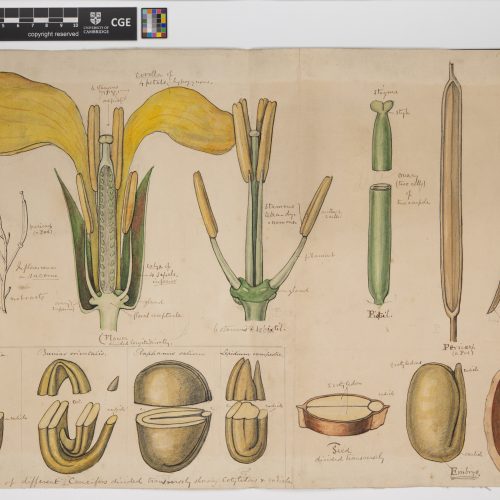
An introduction to flowering plant morphology. We will take a systematic approach to describing plants, exploring their habit, stems, leaves, flowers, fruits and seeds, and learn the botanical terminology used to describe them.
Session 2: Plant diversity – exploring the plant kingdom
An introduction to the major lineages of land plants, from mosses and liverworts to ferns, conifers and flowering plants. We will explore what distinguishes these groups and discover the different life cycles and reproductive strategies found across the plant kingdom.
Session 3: Plant anatomy and physiology – how plants work
A closer look at the internal structure and functioning of plants. We will explore plant growth and tissue types, examine the anatomy of roots, stems and leaves, and investigate key processes including photosynthesis and the transport of water, sugars and nutrients.
Session 4: Plant ecology – plants and their habitats
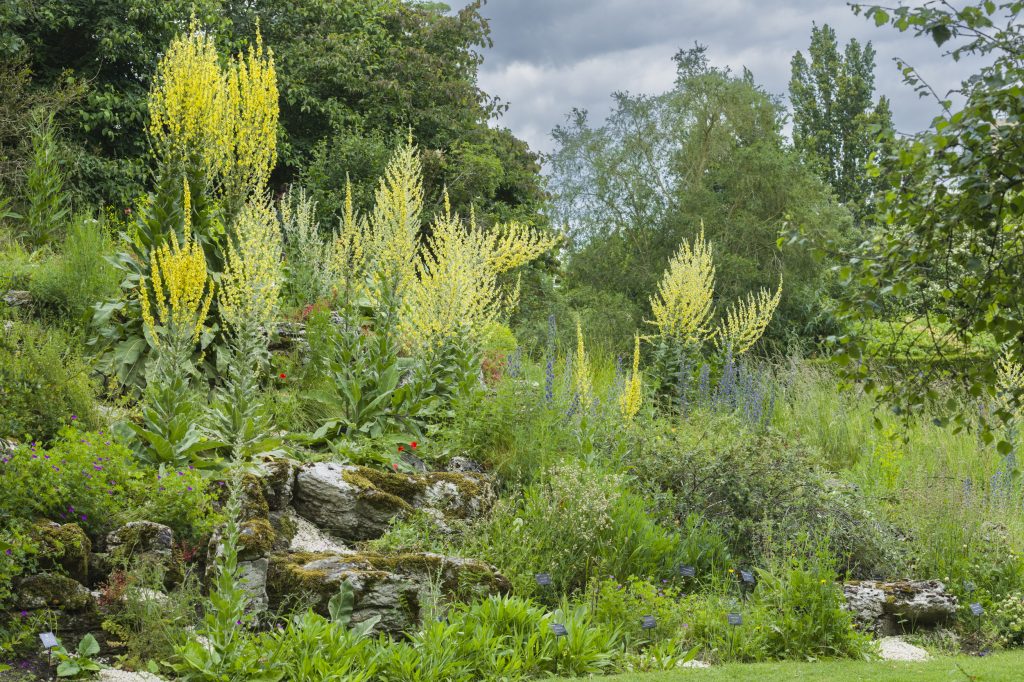
Discover how climate and geology shape the habitats in which plants grow. Using examples from around Cambridge, we will explore distinctive habitats including chalk grassland, fenland and Breckland, considering the conditions and flora that characterise them.
Session 5: Plant identification – putting your knowledge into practice
An introduction to the principles and practice of identifying plants. We will use a range of keys, gradually increasing in sophistication, and work through practical identification exercises using detailed photographs of plant specimens. You will learn how to approach unfamiliar plants, recognise the features used to distinguish between species, and feel more confident about taking your botanical knowledge into the field.
About the tutor
Dr Raphaella Hull is the former Acting Head of Learning at Cambridge University Botanic Garden, where she developed and delivered educational programmes for students and adult learners spanning a range of botanical disciplines. She holds a PhD from the University of Cambridge, exploring how plants perceive symbiotic fungi in the soil and the evolution of this relationship. Now a freelance botanist and educator, she is passionate about helping people connect with their local landscapes and learn to read and understand habitats through plants.
Bookings for this course will close on 28 October
Please note this is an online course. No specialist software is required to participate, but a device with a microphone and webcam will be needed. Full joining instructions will be emailed a few days before the date of the course.
This is a live course and will not be made available as a recording.
Please take the time to read our course cancellations and refunds policy.
Please note that once this course has been filled, you can email education@botanic.cam.ac.uk to be added to a waiting list.
Our Short Courses are for those aged 18+