Back to the page
  • Welcome
  • Visit us
    • Visit us
    • Opening times & information
    • Book Tickets
    • Visiting – travel, dogs, toilets, etc.
    • Garden map
    • Group Visits
    • Tours
    • Press and photography
    • The Garden Café
    • Garden Shops
  • Accessibility
  • What’s on
  • The Garden
    • The Garden
    • About the Garden
    • Horticultural Collections
    • Understanding Plant Labels
    • History of the Garden
    • Wildlife
    • Plant picks of the week
  • Learning
    • Learning
    • Short Courses
    • Certificate in Horticulture
    • Certificate in Botany
    • Schools
    • Colleges and Universities
    • Family Activities
    • Communities
    • Science on Sundays
    • Trails for Adults
  • Science
    • Science
    • Our Science Staff
    • Our Staff Publications
    • Your Science
    • Supporting Your Research
    • Phenology Project
  • Collections
    • Collections
    • Living Collections
    • Seed Bank
    • Herbarium
    • Cory Library
    • Archives
    • Living Collections Portal
    • Botanic Dyes
  • News
  • Support Us
  • Friends
    • Friends
    • Join the Friends
    • Friends’ Events
    • Corporate Support and Corporate Friends
    • Gift Membership Vouchers
  • Cambridge Botanic Lights 2026
    • Cambridge Botanic Lights 2026
    • Cambridge Botanic Lights – Frequently Asked Questions (FAQs)
    • Cambridge Botanic Lights – Accessibility
Donate
Cambridge University Botanic Garden
menu

Today's Opening Times:
10:00am - 6:00pm

  • News
  • Support Us
  • Contact Us
  • Donate
  • Home
  • Visit us
    • Opening times & Information
    • Book Tickets
    • Visiting – travel, dogs, toilets, etc.
    • Garden Map
    • Group Visits
    • Tours
    • Press & Photography
    • Garden Shops
    • The Garden Café
    • Accessibility
    • Virtual Visits
  • What’s on
  • The Garden
    • About the Garden
    • Horticultural Collections
    • Understanding Plant Labels
    • History of the Garden
    • Wildlife
    • Plant picks of the week
  • Learning
    • Short Courses
    • Certificate in Horticulture
    • Certificate in Botany
    • Schools
    • Colleges and Universities
    • Family Activities
    • Communities
    • Science on Sundays
    • Trails for Adults
  • Science
    • Our Science Staff
    • Our Staff Publications
    • Your Science
    • Supported Publications
    • Supporting Your Research
    • Phenology Project
  • Collections
    • Living Collections
    • Herbarium
    • Seed Bank
    • Cory Library
    • Archives
    • Collecting Expeditions
    • National Plant Collections ®
    • Living Collections Portal
    • Botanic Dyes
  • Friends
    • Join the Friends
    • Gift Membership Vouchers
    • Friends’ Events
    • Corporate Support and Corporate Friends
  • Cambridge Botanic Lights 2026
    • Cambridge Botanic Lights – Frequently Asked Questions (FAQs)
    • Cambridge Botanic Lights – Accessibility
  • Open search panel
Close search panel
Back to listing
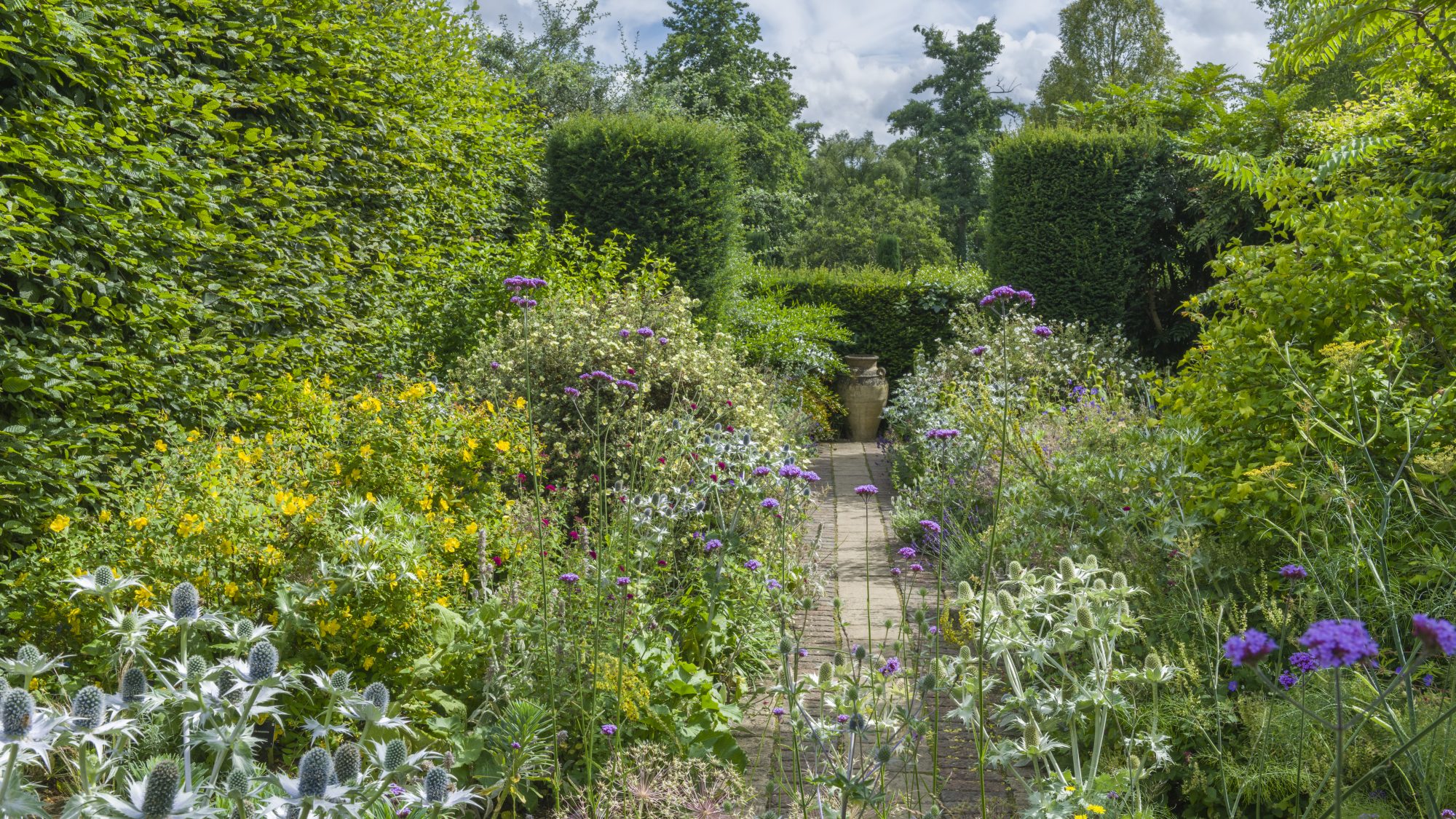
Green shrubs with yellow, purple and blue flowers and plantings line a narrow path in a garden. It is enclosed by tall buses and trees can be seen in the background.
Home News Garden news Right plant, right place: Gardening for a changing climate
Share Created with Sketch.
  • Email Share this with Email
  • Facebook Share this with Facebook
  • Twitter Share this with Twitter
  • Pinterest Share this with Pinterest
  • WhatsApp Share this with WhatsApp
  • Google + Share this with Google plus

Right plant, right place: Gardening for a changing climate

Head of Horticulture, Sally Pettit, shares advice on how to make gardens that thrive in a changing climate.

01 July 2026

How many of us as gardeners consider where our plants originate from?

This doesn’t just mean knowing which garden centre we bought them from, but understanding where in the world they naturally occur, and what the local conditions are. This knowledge can help us understand which plants best suit our own gardens and follow the old gardening adage of ‘right plant, right place’.

How plants adapt to their natural environments

Vibrant yellow and green shrubs of different sizes and varieties line a gravel path with trees and a cloudy blue sky in the background.
The Mediterranean Beds at Cambridge University Botanic Garden (credit: Howard Rice). Click for information
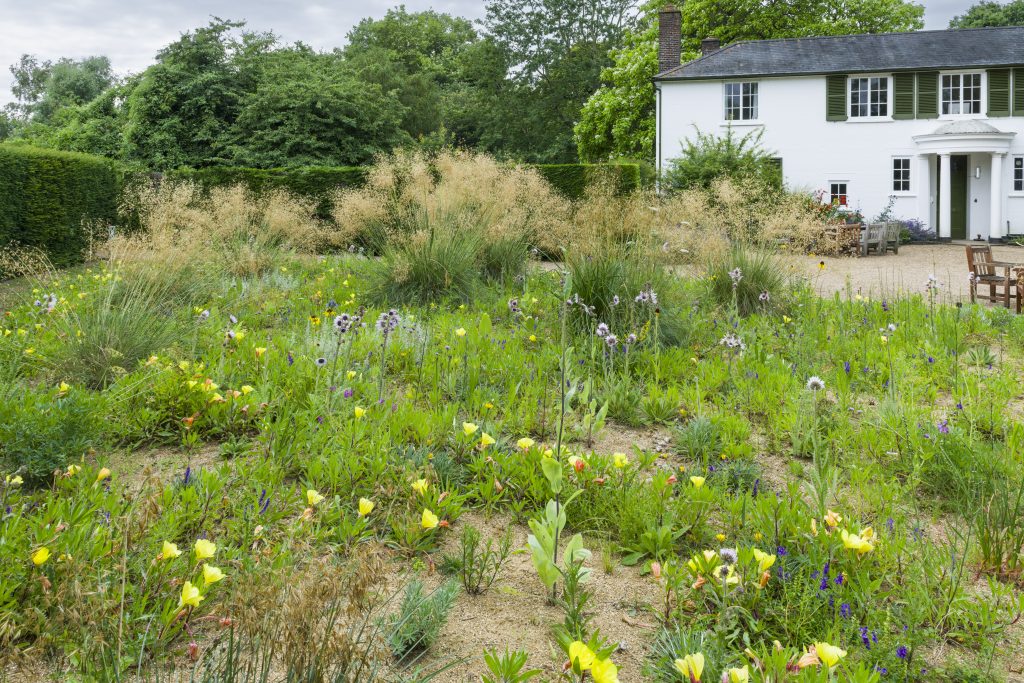
Sparse plantings of yellow and purple flowers, green shrubs and grasses on a gravel ground. A white house with green window shutters can be partially seen in the background, with trees, tables and chairs.
The Dry Meadow at Cory Lodge (credit: Howard Rice). Click for information
Cacti and succulents of different shapes and sizes in a glasshouse, with a paved path running through.
Cacti and succulents in the Arid Lands house in the Glasshouse Range (credit: Howard Rice). Click for information

Recent evidence suggests that plants began colonising land over 500 million years ago, and they have continued to evolve since that time to give the plants we are familiar with today. The process of plant evolution is very slow and is influenced by genetic composition, as well as climatic factors.

Light, temperature, water and humidity are hugely influential in plant development, affecting plant growth and geographic distribution. If any of these factors change, even slightly, it can have a detrimental impact on plant health and even survival, with changes to environmental factors affecting entire populations or species. For example, desert plants have evolved to survive with limited amounts of water but, if climate change brings increased rainfall to these areas, the desert plants we are familiar with today may cease to exist.

There are concerns that so rapid is the pace of climate change, and subsequent environmental change, that plants may not evolve at the same rate, and will become either threatened or extinct. High altitude alpine plants, for example, are considered to be at high risk in a warming climate. They have evolved to survive in extremes of temperature and light. As temperatures increase the only option they have is to migrate upwards to escape increasing temperatures, but there is limited scope for them to do this.

For many plants, changes to environmental conditions such as reduced water can cause stress or even death, but the resulting stress can also increase a plant’s susceptibility to attack from pests and disease.

Climate change and the future of plant survival

A wooden board details the date, temperatures and rainfall written in chalk at Cambridge University Botanic Garden.
The Daily Weather Recording at Cambridge University Botanic Garden. Click for information
Yellow flowers with green leaves
Oenothera macrocarpa in the Dry meadow at CUBG. Click for information
Tall purple, orange and yellow flowers with green plants and shrubs.
Dianthus carthusianorum, origanum, Galium verum, Berkheya purpurea and kniphofia in the Dry Meadow (credit: Howard Rice). Click for information
Yellow, purple and pink flowers with different grasses and green shrubs create a planting border in front of trees.
Pennisetum orientale and dianthus carthusianorm in the Herbaceous Beds (credit: Howard Rice). Click for information
A purple flower with multiple buds with a blurred background.
Dianthus carthusianorum in the Dry Meadow (credit: Howard Rice). Click for information

Not only does climate change affect plants in their natural habitats, but it also impacts our garden plants. Here at Cambridge University Botanic Garden we have taken daily weather readings since 1904. In 2019 we experienced a temperature of 38.7°C, the highest temperature ever recorded in the UK, and on 26th May 2026 we recorded a maximum temperature of 34°C, which coincided with a dry spring and followed a wet winter. Historically such weather patterns would not have been considered normal.

In order for our living collections and plants to survive in the future we are making adjustments to our horticultural practices. In our Dry Garden, plants such as Hibiscus ‘White Chiffon’ thrive alongside Stachys byzantina (lambs’ ears) and Euphorbia myrsinites (myrtle spurge), and in the Dry Meadow steppe and prairie plants include Oenothera macrocarpa (evening primrose) and Dianthus carthusianorum (the Carthusian pink), which flourish in the dry, well-drained conditions. These established Garden features, along with new and future plantings, include species suited to our changing weather patterns and which demonstrate climate resilience.

Cambridge University Botanic Garden expeditions to countries such as Croatia, Chile and Kyrgyzstan enable us to introduce plants from habitats which are predicted to align with Cambridge’s future climate and give us scope to adapt our collections for the future.

Building a climate resilient garden

 A man walks down a garden path with two watering cans. The path is lined with red, purple and yellow flowers, green shrubs and trees.
We are developing plans to improve our irrigation system, not so that we can increase our water consumption, but so that we can use water more efficiently in the future. Click for information
Tall purple, yellow and orange flowers with a blurred background.
Dianthus carthusianorum, origanum, Galium verum and kniphofia in the Dry Meadow. (credit: Howard Rice) Click for information
A garden filled with yellow, purple and green plants and flowers has a path running through, with a large plant pot and bench to the right.
The Dry Garden at Cambridge University Botanic Garden (credit: Howard Rice). Click for information

We are also developing plans to improve our irrigation system, not so that we can increase our water consumption, but so that we can use water more efficiently in the future. Proposals include a new ring main and pumps to more effectively distribute water across the site, to monitor soil moisture levels, and also to increase our rainwater harvesting capacity. Such measures will allow us to protect the Garden and its collections for future generations of scientists, horticulturists and visitors.

Similar steps can be made in your own garden. Choosing plants which suit the weather will make gardening easier – think about ‘right plant, right place’.

Understanding where a plant originates from, and what conditions it grows in naturally can help inform if it will thrive in your garden in the future. Collect rainwater in a water butt to limit your use of mains water. If you need to use a hose pipe, repair leaks and aim to water early in the morning for most benefit. Also, only water plants which are showing signs of stress and really need it – many established plants (including lawns) will go longer without water than newly planted specimens.

Gardening in a changing climate can be challenging and we need to adapt our gardens to match future weather conditions. With careful selection though we can add new plants to our gardens that will be more resilient to changes in the weather. While this may mean that traditional herbaceous borders become a thing of the past for many of us, there is still plenty of scope to create beautiful gardens which will thrive in the future.

Gardening jobs for July

  • Deadhead bedding plants and roses to encourage more flowers.
  • Water new plantings and plants which are showing signs of stress using rainwater collected in a water butt. There is no need to water your lawn – it will recover when it rains.
  • Take cuttings of tender plants such as pelargoniums (geraniums) and fuchsias.
  • Collect seed from annuals such as poppies and cornflowers to sow next year.
  • Sow crops such as beetroot, lettuce, coriander and Florence (bulb) fennel
You may also be interested in

Bringing native plants into the garden for wildlife and colour

Bringing native plants into the garden for wildlife and colour

Head of Horticulture, Sally Pettit, highlights native plants and how you can incorporate them into your garden.
Plants and Climate Change

Plants and Climate Change

Our climate is changing. How plants respond will depend on their adaptations and ecology.
Inspired by the Rock Garden: How to grow alpines at home

Inspired by the Rock Garden: How to grow alpines at home

Head of Horticulture, Sally Pettit, highlights the Garden's wonderful Rock Garden and how it can be created in spaces of any size.
University of Cambridge Museums and Botanic Garden

Social

  • Follow us on YouTube
  • Follow us on Twitter
  • Follow us on Instagram
  • Follow us on Facebook
  • Follow us on Threads
  • Follow us on LinkedIn

© 2026 Cambridge University Botanic Garden

  • Privacy policy
  • Contact us