Back to the page
  • Welcome
  • Visit us
    • Visit us
    • Opening times & information
    • Book Tickets
    • Visiting – travel, dogs, toilets, etc.
    • Garden map
    • Group Visits
    • Tours
    • Press and photography
    • The Garden Café
    • Garden Shops
  • Accessibility
  • What’s on
  • The Garden
    • The Garden
    • About the Garden
    • Horticultural Collections
    • Understanding Plant Labels
    • History of the Garden
    • Wildlife
    • Plant picks of the week
  • Learning
    • Learning
    • Short Courses
    • Certificate in Horticulture
    • Certificate in Botany
    • Schools
    • Colleges and Universities
    • Family Activities
    • Communities
    • Science on Sundays
    • Trails for Adults
  • Science
    • Science
    • Our Science Staff
    • Our Staff Publications
    • Your Science
    • Supporting Your Research
    • Phenology Project
  • Collections
    • Collections
    • Living Collections
    • Seed Bank
    • Herbarium
    • Cory Library
    • Archives
    • Living Collections Portal
    • Botanic Dyes
  • News
  • Support Us
  • Friends
    • Friends
    • Join the Friends – signing up is easy!
    • Friends’ Events
    • Corporate Support and Corporate Friends
    • Gift Membership Vouchers
  • Cambridge Botanic Lights 2026
    • Cambridge Botanic Lights 2026
    • Cambridge Botanic Lights – Frequently Asked Questions (FAQs)
    • Cambridge Botanic Lights – Accessibility
    • No gnome left behind: Donate your garden gnomes to Cambridge Botanic Lights 2026
Donate
Cambridge University Botanic Garden
menu

Today's Opening Times:
10:00am - 6:00pm

  • News
  • Support Us
  • Contact Us
  • Donate
  • Home
  • Visit us
    • Opening times & Information
    • Book Tickets
    • Visiting – travel, dogs, toilets, etc.
    • Garden Map
    • Group Visits
    • Tours
    • Press & Photography
    • Garden Shops
    • The Garden Café
    • Accessibility
    • Virtual Visits
  • What’s on
  • The Garden
    • About the Garden
    • Horticultural Collections
    • Understanding Plant Labels
    • History of the Garden
    • Wildlife
    • Plant picks of the week
  • Learning
    • Short Courses
    • Certificate in Horticulture
    • Certificate in Botany
    • Schools
    • Colleges and Universities
    • Family Activities
    • Communities
    • Science on Sundays
    • Trails for Adults
  • Science
    • Our Science Staff
    • Our Staff Publications
    • Your Science
    • Supported Publications
    • Supporting Your Research
    • Phenology Project
  • Collections
    • Living Collections
    • Herbarium
    • Seed Bank
    • Cory Library
    • Archives
    • Collecting Expeditions
    • National Plant Collections ®
    • Living Collections Portal
    • Botanic Dyes
  • Friends
    • Join the Friends – signing up is easy!
    • Gift Membership Vouchers
    • Friends’ Events
    • Corporate Support and Corporate Friends
  • Cambridge Botanic Lights 2026
    • Cambridge Botanic Lights – Frequently Asked Questions (FAQs)
    • Cambridge Botanic Lights – Accessibility
    • No gnome left behind: Donate your garden gnomes to Cambridge Botanic Lights 2026
  • Open search panel
Close search panel
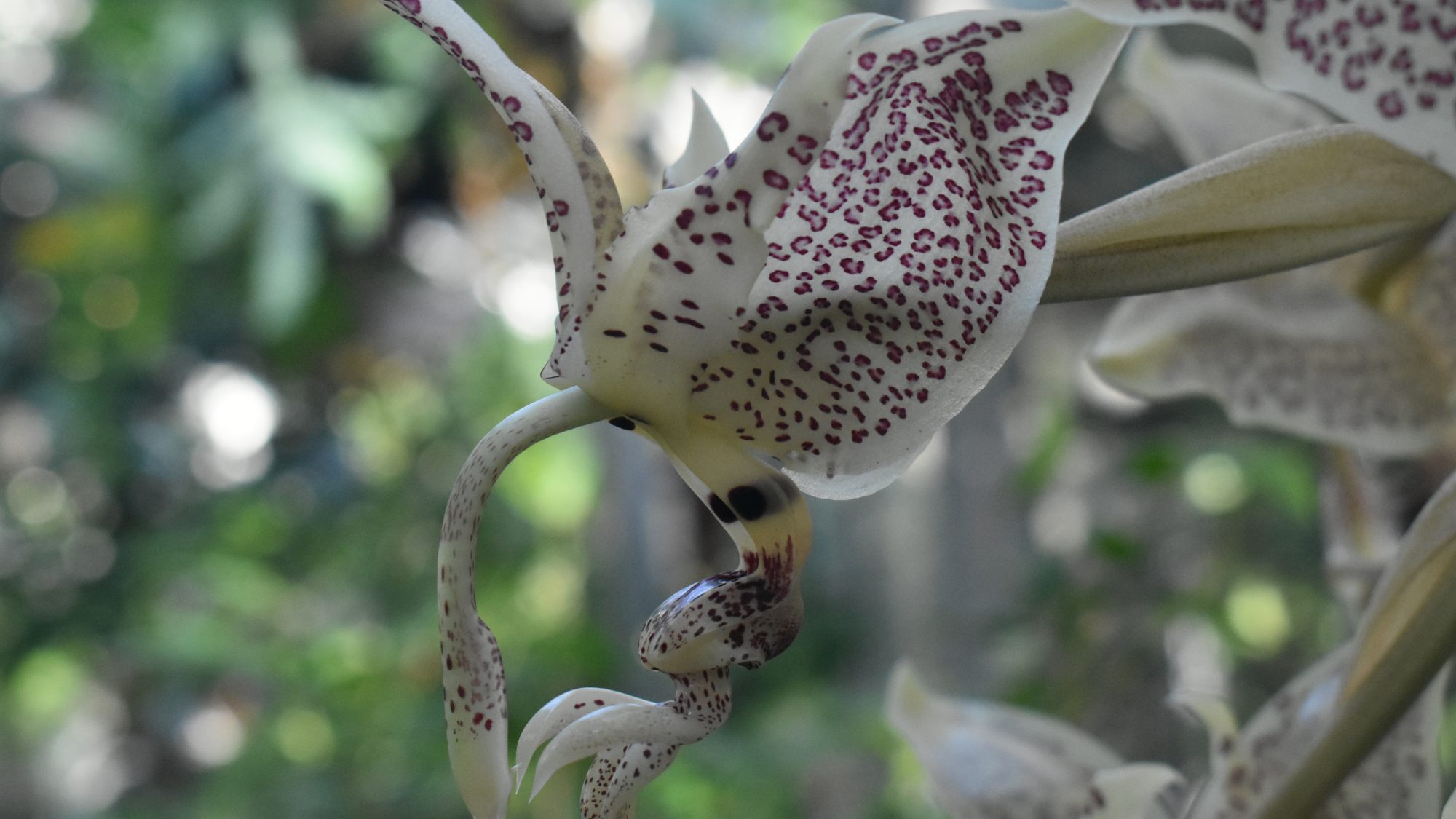
Cream orchid with deep red speckles.
Home Plants Stanhopea oculata
Share Created with Sketch.
  • Email Share this with Email
  • Facebook Share this with Facebook
  • Twitter Share this with Twitter
  • Pinterest Share this with Pinterest
  • WhatsApp Share this with WhatsApp
  • Google + Share this with Google plus

Stanhopea oculata

View plant on map View all plants

This scented orchid is producing a mass of flower in the eastern Glasshouse corridor.

An epiphytic species, Stanhopea oculata occurs in tropical zones between 1000m and 3000m above sea level from southern Mexico to northern Nicaragua. It is one of an estimated 70 species from Mexico to Central and South America. Members of the genus have complex flower structures held in pendent racemes and comprising three outer sepals; two wing-like petals and a waxy lip-like petal; and a distinct column containing male and female reproductive organs. S. oculata has a clump of basal pseudobulbs which bear one large, evergreen leaf. Short-lived, fragrant flowers are pale yellow, white or cream and are covered with maroon spots. The flowers of this genus are pollinated by male Euglossine bees (orchid bees) which mistakenly identify the flowers for female bees. The genus commemorates Philip Henry, the Fourth Earl of Stanhope (1781-1855) who was the President of the Medico-Botanical Society, while the species name oculata means eyes, and is presumably used in reference to the markings on the flower.

University of Cambridge Museums and Botanic Garden

Social

  • Follow us on YouTube
  • Follow us on Twitter
  • Follow us on Instagram
  • Follow us on Facebook
  • Follow us on Threads
  • Follow us on LinkedIn

© 2026 Cambridge University Botanic Garden

  • Privacy policy
  • Contact us