Back to the page
  • Welcome
  • Visit us
    • Visit us
    • Opening times & information
    • Book Tickets
    • Visiting – travel, dogs, toilets, etc.
    • Garden map
    • Group Visits
    • Tours
    • Press and photography
    • The Garden Café
    • Garden Shops
  • Accessibility
  • What’s on
  • The Garden
    • The Garden
    • About the Garden
    • Horticultural Collections
    • Understanding Plant Labels
    • History of the Garden
    • Wildlife
    • Plant picks of the week
  • Learning
    • Learning
    • Short Courses
    • Certificate in Horticulture
    • Certificate in Botany
    • Schools
    • Colleges and Universities
    • Family Activities
    • Communities
    • Science on Sundays
    • Trails for Adults
  • Science
    • Science
    • Our Science Staff
    • Our Staff Publications
    • Your Science
    • Supporting Your Research
    • Phenology Project
  • Collections
    • Collections
    • Living Collections
    • Seed Bank
    • Herbarium
    • Cory Library
    • Archives
    • Living Collections Portal
    • Botanic Dyes
  • News
  • Support Us
  • Friends
    • Friends
    • Join the Friends – signing up is easy!
    • Friends’ Events
    • Corporate Support and Corporate Friends
    • Gift Membership Vouchers
  • Cambridge Botanic Lights 2026
    • Cambridge Botanic Lights 2026
    • What is Cambridge Botanic Lights 2026?
    • Cambridge Botanic Lights – Frequently Asked Questions (FAQs)
    • Cambridge Botanic Lights – Accessibility
    • No gnome left behind: Donate your garden gnomes to Cambridge Botanic Lights 2026
Donate
Cambridge University Botanic Garden
menu

Today's Opening Times:
10:00am - 5:00pm

  • News
  • Support Us
  • Contact Us
  • Donate
  • Home
  • Visit us
    • Opening times & Information
    • Book Tickets
    • Visiting – travel, dogs, toilets, etc.
    • Garden Map
    • Group Visits
    • Tours
    • Press & Photography
    • Garden Shops
    • The Garden Café
    • Accessibility
    • Virtual Visits
  • What’s on
  • The Garden
    • About the Garden
    • Horticultural Collections
    • Understanding Plant Labels
    • History of the Garden
    • Wildlife
    • Plant picks of the week
  • Learning
    • Short Courses
    • Certificate in Horticulture
    • Certificate in Botany
    • Schools
    • Colleges and Universities
    • Family Activities
    • Communities
    • Science on Sundays
    • Trails for Adults
  • Science
    • Our Science Staff
    • Our Staff Publications
    • Your Science
    • Supported Publications
    • Supporting Your Research
    • Phenology Project
  • Collections
    • Living Collections
    • Herbarium
    • Seed Bank
    • Cory Library
    • Archives
    • Collecting Expeditions
    • National Plant Collections ®
    • Living Collections Portal
    • Botanic Dyes
  • Friends
    • Join the Friends – signing up is easy!
    • Gift Membership Vouchers
    • Friends’ Events
    • Corporate Support and Corporate Friends
  • Cambridge Botanic Lights 2026
    • What is Cambridge Botanic Lights 2026?
    • Cambridge Botanic Lights – Frequently Asked Questions (FAQs)
    • Cambridge Botanic Lights – Accessibility
    • No gnome left behind: Donate your garden gnomes to Cambridge Botanic Lights 2026
  • Open search panel
Close search panel
Back to listing
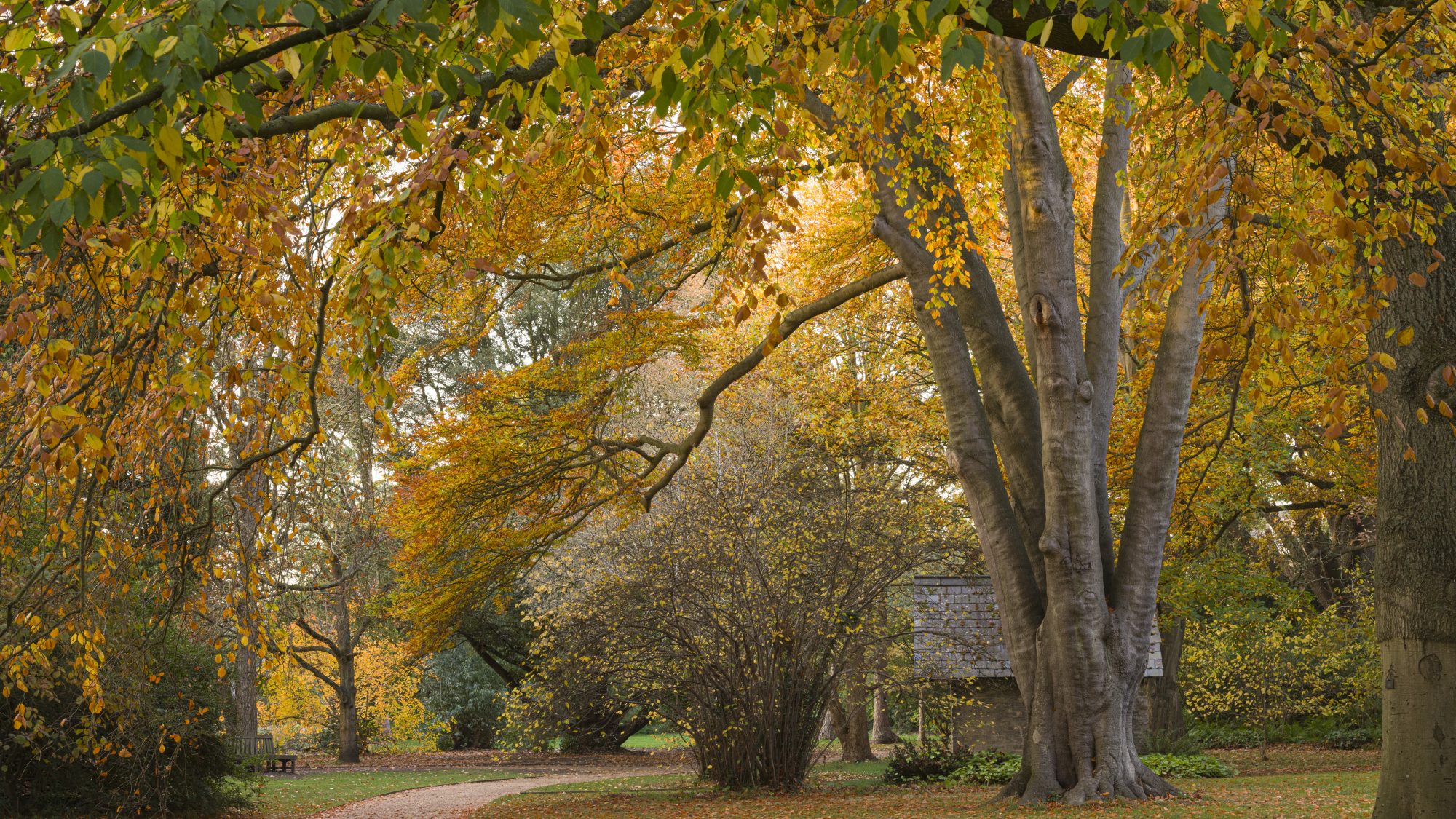
An autumnal scene in a garden with trees of yellow, orange and green and leaves scattered on the lawn and path.
Home News Garden news Reading the signs of the seasons: Tuning in to nature’s calendar
Share Created with Sketch.
  • Email Share this with Email
  • Facebook Share this with Facebook
  • Twitter Share this with Twitter
  • Pinterest Share this with Pinterest
  • WhatsApp Share this with WhatsApp
  • Google + Share this with Google plus

Reading the signs of the seasons: Tuning in to nature’s calendar

Head of Horticulture, Sally Petitt, shares the joy of the changing seasons and the impact climate change is having.

02 October 2026

One of the great benefits of being a horticulturist is the connection with the natural world, and this is true of anyone who spends time outside observing their surroundings, whether it be the plants in our gardens or in the wider landscape, migratory birds, or even the cycle of the moon.

During my horticultural career I’ve observed the inevitable seasonal shifts of flowering and fruiting, but also daylight hours, weather, and even the first mowing of the lawns in spring. These observations can help with planning and maintaining a garden, no matter what size, but on a personal level also help anchor me and provide a sense of calm.

For me there is something humbling about the changes in the seasons, the weather and the gardening calendar. During the darkest and coldest winter days, there’s always an optimism that days will lengthen, the light brighten and temperatures rise, and with that comes the bursting of buds and spring blossom. In contrast there is a point in autumn where the shortening days, cooling temperatures and turning of leaves indicate a time to tidy the garden, clear away the old and make way for the new. Even those of us with limited access to the great outdoors are influenced by the seasonal rhythms of the natural world.

Nature's calendar

A person admires a lake, stood next to trees of red, orange, yellow and green.
The changing colours of the trees by the Lake (credit: Howard Rice). Click for information
A close up of a small yellow flower and its stem, covered in frost with a blurred background.
Chimonanthus praecox var. grandiflorus covered in frost (credit: Howard Rice). Click for information
A Yoshino cherry tree in bloom on a lawn, with hazy trees in the background and vibrant green shrubs in front of it.
The Yoshino cherry tree in bloom in the Garden (credit: Howard Rice). Click for information
A garden filled with lavender, green shrubs, yellow and blue flowers with a paved path going through it and a bench in the foreground.
The Dry Garden at CUBG (credit: Howard Rice). Click for information

In a garden, being in tune with seasonal shifts, or nature’s calendar, can influence what we grow, and how we grow it, but we needn’t limit observations to the seasons. Noticing a change in temperature and rainfall from one week to another can affect how we grow our plants and maintain our gardens. Low spring temperatures can impact sowing times for crops, while extended periods of drought influence not only watering regimes, but also decisions about what we might grow in the future.

On a large scale, watching the turning wheel of nature can inform horticultural practices, and on a personal level, observing nature in our own gardens can be equally useful. Today, in a changing climate, observing nature’s calendar is more relevant than it has ever been. In the past, seasonal changes in temperature, rainfall and day length have been generally predictable, but even small variations in climate can result in a shift in timing of ecological patterns, wildlife behaviour and ecosystems. The succession of heatwaves during summer this year, combined with a prolonged drought, has affected not only human behaviour, but also our gardens, wildlife, landscapes, ecosystems and farming.

UK records show that oak trees now come into leaf one month earlier than they did in the 1950s, while snowdrops appear two months earlier than they did in the 1950s. For us as gardeners, this may mean a change in the appearance of our gardens, but for wildlife such changes may be dramatic. Pollinators reliant on certain species for nectar may now have no food source, while insects reliant on oak trees for food or shelter may also struggle. In turn, the impact on food production may also be detrimental, with a fall in pollinators and periods of drought severely affecting crop yields.

Since 2022, we have been carrying out a Phenology Project at Cambridge University Botanic Garden in which we record leaf, flower and fruit development, along with leaf colouring and leaf fall in 90 tree species. Since the Project started, we have noticed that there are definite shifts in the timing of these occurrences. As our data set increases, we will be able to build a picture to help us understand the effects of climate change, and also to help us grow and conserve plants in the future.

Climate change impacts on gardens

Trees line a snow covered path as the sun sets in the background.
The Main Walk in winter at Cambridge University Botanic Garden (credit: Howard Rice). Click for information
Yellow daffodils and small purple flowers cluster on a lawn.
Daffodils and Scilla siberica at Cambridge University Botanic Garden (credit: Howard Rice). Click for information
Autumn colours in the Garden (credit: Howard Rice). Click for information

As autumn creeps towards us we can expect to see leaf colour, leaf fall, hedges full of hawthorns and sloes, and the onset of the first seasonal frost. But this year, given extreme summer weather, autumn may not be as predictable as it once was, potentially resulting in less autumn colour, early leaf fall, fewer fruits in our hedgerows, and fewer or less severe frost than we may have experienced in the past.

The impacts of any shifts in our seasons and weather may not be entirely predictable, but by observing seasonal biological changes in our own gardens, as gardeners we are all probably noticing changes in flowering time, or in the occurrence of frosts. In noticing these changes many of us are already adapting our own gardening practices to suit a changing climate. While we may not be aware of it, gardeners are very much in tune with nature and shifts in nature’s calendar.

Gardening jobs for October

Snowdrops and ferns cluster at the base of trees.
Snowdrops appear two months earlier than they did in the 1950s (credit: Howard Rice). Click for information
The Rose Garden at CUBG (credit: Howard Rice). Click for information
Autumn colours by the Lake (credit: Howard Rice). Click for information
The Scented Garden (credit: Howard Rice). Click for information
  • Plant trees and shrubs and hardy perennials once the soil is wet but ensure you keep them moist over winter.
  • Sow seed of perennial plants such as Astrantia, Achillea and Centranthus.
  • Sow green manure to protect soil over winter and sow hardy crops such as broad beans and peas for harvesting in late spring.
  • Clean your greenhouse and cold frame ready for overwintering tender perennials.
  • Collect fallen leaves from the garden and add them to your compost bin or make a leaf litter bin for mulching the garden when the leaves have rotted down.
  • Spike compacted lawns and backfill the holes with fine grit or sand to improve drainage.
You may also be interested in

Grasses: Adding movement, texture and sound to your garden

Grasses: Adding movement, texture and sound to your garden

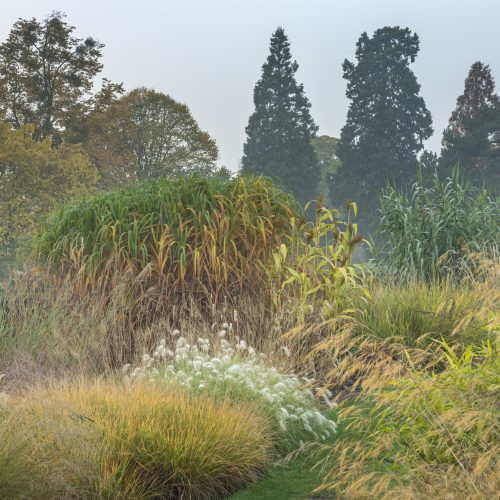
Head of Horticulture, Sally Petitt, shares the beauty and benefits of adding grasses to your garden.
Inspired by the Botanic Garden: Growing tropical plants at home

Inspired by the Botanic Garden: Growing tropical plants at home

Head of Horticulture, Sally Petitt, shares her love of tropical plants and how you can grown them at home.
Right plant, right place: Gardening for a changing climate

Right plant, right place: Gardening for a changing climate

Head of Horticulture, Sally Pettit, shares advice on how to make gardens that thrive in a changing climate.
University of Cambridge Museums and Botanic Garden

Social

  • Follow us on YouTube
  • Follow us on Twitter
  • Follow us on Instagram
  • Follow us on Facebook
  • Follow us on Threads
  • Follow us on LinkedIn

© 2026 Cambridge University Botanic Garden

  • Privacy policy
  • Contact us